

























































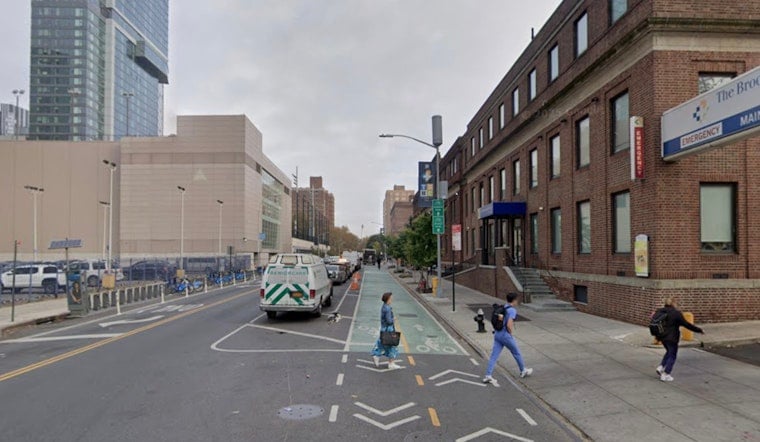
After years of advocacy and stop-and-start politics, the city’s transportation agency is finally moving to plug the notorious one-block bike-lane gap on Ashland Place in Downtown Brooklyn. The redesign would overhaul the southern stub between Lafayette Avenue and Hanson Place, adding protected bike space and more room for people on foot so the block actually connects to the rest of Brooklyn’s protected network.
What DOT Is Proposing
Under the draft design, the Department of Transportation would convert Ashland Place between Lafayette and Hanson to one-way northbound for motor vehicles and install a two-way protected bike lane along the north curb, while turning part of Hanson Place into a shared street with a westbound vehicle lane and expanded pedestrian space, according to an NYC DOT presentation. The package also calls for protected bike lanes on the southern side of Lafayette Avenue to create a direct link to the Schermerhorn Street bike lane. As reported by Streetsblog New York City, DOT plans to bring the updated design to the Brooklyn Community Board 2 transportation committee on Thursday evening.
Backstory: Long-Fought Connection
DOT first floated a version of this corridor plan to Community Board 2 in mid-2022, when agency slides showed a continuous two-way protected lane on Ashland Place and Navy Street as part of a larger north–south connection. Local advocates launched a "Close the Gap on Ashland Place" campaign that pressed the board and elected officials to push DOT to finish the missing block. According to Transportation Alternatives, volunteers and supporters have kept steady public pressure on the agency for months.
Safety Record And Ridership
The unfinished southern stub has become a safety flashpoint: Streetsblog reports that the block has seen 29 crashes since DOT’s September 2023 work, injuring five cyclists and two pedestrians. DOT’s own NYC DOT presentation points to heavy demand nearby: the Hanson Place Citi Bike dock ranks among Brooklyn’s busiest, with roughly 43,000 trips starting there in 2021, which helps explain why planners want a continuous protected connection through this hub. Those numbers have helped cement the block’s "Crashland" reputation among riders.
Local Reaction And Political Context
Advocates have greeted the move as a long-overdue fix to a missing link that forces people on bikes into conflict with trucks and turning drivers. The decision also fits into a broader push by Mayor Zohran Mamdani’s administration to revive stalled bus and bike projects across the city, a shift local outlets have been chronicling in recent months. Transportation Alternatives and multiple local elected officials have repeatedly backed completing the Ashland connection and say they will be watching the Community Board process closely.
What Happens Next
DOT will present the redesign to Brooklyn Community Board 2’s transportation committee this week, and the board’s feedback is expected to shape final tweaks before the agency moves toward installation. Earlier DOT materials projected minimal parking impacts, on the order of a few spaces per block, and outlined protections such as concrete barriers, pedestrian refuge islands and other traffic-calming measures. If approvals and scheduling line up, the agency and advocates say crews could finish the missing link within the year, finally closing a gap that cyclists and neighborhood groups have been trying to seal for years.





