

























































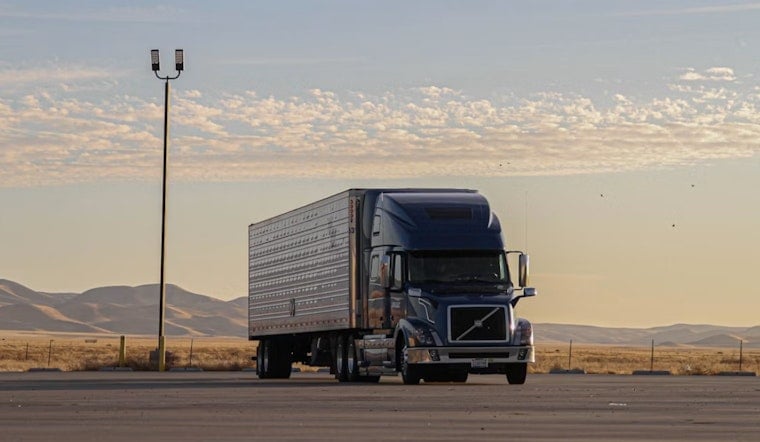
A cabless electric freight truck from a San Francisco startup has suddenly become ground zero in California's fight over driverless big rigs. Humble Robotics’ new Humble Hauler, built to move containers and other heavy loads without anyone in the cab, pitches cheaper operations and cleaner runs. That futuristic silhouette, combined with a key regulatory shift, has unions and safety advocates on edge as the state rewrites the rules for heavy autonomous vehicles.
Humble's pitch and plans
Humble Robotics stepped out of stealth in April and says it plans to launch customer pilots within a year, even though it has not yet applied for a California DMV autonomous-vehicle permit, as reported by the Los Angeles Times. The startup says it has raised roughly $24 million in seed funding and currently employs fewer than 50 people.
What the Humble Hauler is
According to a company press release via PR Newswire, the Humble Hauler is a cabless Class 8 electric platform built from scratch for dock-to-dock duty, hauling standard cargo containers or specialized loads. The company says losing the cab allows for 360-degree sensor coverage and that the system leans on vision-language-action AI to interpret tricky loading zones, road conditions, and terminal operations.
Regulatory shift opens the door
In late April the California DMV adopted new autonomous-vehicle regulations that remove the ban on operating AVs with a gross vehicle weight rating over 10,001 pounds and require heavy-duty manufacturers to log 500,000 miles of testing at each phase before seeking deployment, according to the California DMV. The updated rules also add extra enforcement tools and let local officials issue emergency geofencing orders to limit AV activity during incidents.
Unions, jobs and safety worries
Teamsters California, which the union says represents about 250,000 workers, slammed the DMV rule change as “reckless” and vowed to use every available tool, including lawsuits, to block driverless heavy-duty trucks, according to a statement published via PR Newswire. California is one of the country’s biggest freight markets and employs more than 130,000 truck drivers, the Los Angeles Times reports, a reality labor leaders say makes rapid automation both politically explosive and logistically risky.
What comes next for pilots and ports
Humble says it intends to comply with California’s new framework but still has not filed for a heavy-duty permit. The DMV’s long testing requirements and safety-case reviews mean any fully driverless rollout in the state will probably be slow, phased, and tightly supervised, according to the California DMV. Industry coverage notes that Humble will be going up against established rivals such as Aurora and Kodiak, which are already running commercial pilots in other regions, and that the startup will need real-world performance data before big logistics customers sign on, as reported by TNW.
Why California cares
The fight looms large in California because the state is aggressively pushing truck fleets to go electric, which aligns neatly with Humble’s zero-emission pitch, even as unions warn that automation could gut driving jobs.



