

























































Long Beach gave home kitchens a legal path into the restaurant business, and Steak Freaks immediately tested how far that path could stretch. The temporary steak-frites operation sold out dinners from a living room and backyard before shutting down on July 26, less than three months after its launch.
The experiment worked almost too well. As reported by the Long Beach Post, chef Brad Thomas and ceramicist Clay Wood turned a home into a $69-per-person dining room, hired a small staff and attracted more customers than the property could comfortably handle.
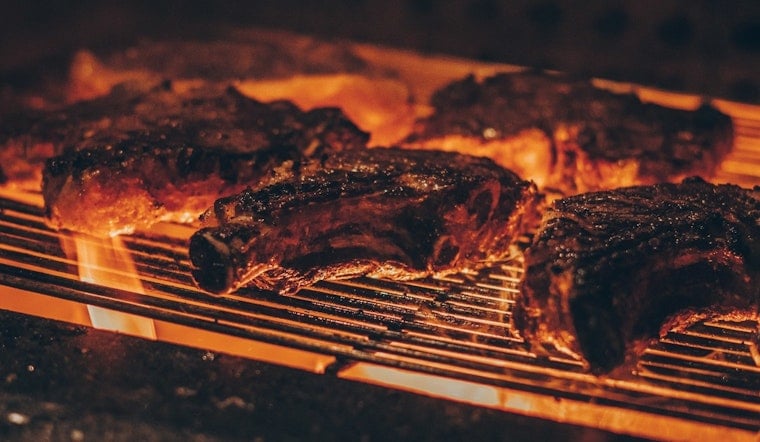
At its busiest, the project looked less like an occasional supper club and more like a compact restaurant without the lease. LAist described two seatings serving 32 guests across a night, with hanger steak, crispy frites and a six-course menu prepared partly over open flame in the backyard.
The Rules Were Built For A Launchpad
Long Beach’s MEHKO ordinance allows a home-based food business to serve up to 30 meals a day and 90 meals a week, while limiting gross annual sales to $100,000. The city ordinance also bars alcohol sales or consumption and permits one full-time employee, or multiple employees whose combined hours do not exceed 40 hours per week.
Those limits make sense for a cook building a customer base from home, but they become restrictive when the concept is designed around reservations, multiple courses and a full-service team. The city’s rules also require operators to keep sales records, prepare food the same day and sell directly to consumers rather than operate as caterers or wholesalers.
Before opening, MEHKO operators need a public health permit, a Long Beach business license, food-safety certifications and a kitchen inspection. Long Beach health officials describe the program as a way to support home-based food businesses while maintaining permitting and sanitation oversight.
Steak Freaks Found The Ceiling Quickly
Steak Freaks’ final dinner came after demand had already outgrown Wood’s house. The Long Beach Post reported that Wood is moving out and ownership has shifted as Thomas prepares to rebrand the project and look for a commercial space.
That next move is the clearest sign that the home-restaurant law did what it was supposed to do, even if it could not contain the result. Thomas described Steak Freaks as a launch project to help him find his way back to cooking, and the demand gave him a practical test run before taking on the much larger risk of a brick-and-mortar restaurant.
Long Beach is part of a broader California push to make small-scale food businesses more accessible, particularly for cooks who cannot afford commercial rents or a traditional restaurant build-out. The model is increasingly being treated as a low-cost proving ground, while the home-kitchen boom shows how quickly backyard dinners can start looking like a new category of neighborhood restaurant.
Thomas now says the next version could be an upscale diner by day, with pancakes, burgers and steak frites, followed by an avant-garde tasting menu at night. Steak Freaks may have outgrown one Long Beach backyard, but its short run suggests the city’s new home-kitchen framework can do more than legalize small food sales: it can expose which chefs are ready for a bigger stage.





