

























































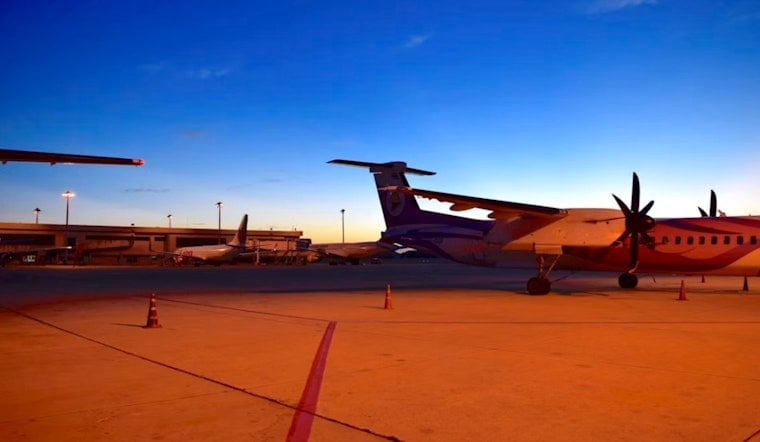
The Cedar City air tanker base did not just have a busy week - it rewrote its own record book. Crews broke the base's all-time daily dispatch record twice in a single week, moving nearly 160,000 gallons of fire retardant as aircraft hustled between multiple fires across the Southern Great Basin. Pilots, loaders and dispatchers pulled long shifts from morning until dark while tankers cycled nonstop through the base's loading pits.
According to KUTV, the Bureau of Land Management operates the base, which this season has supported large air tankers, single-engine air tankers, air-attack aircraft and other wildfire resources. The station typically loads aircraft with about 4,000 gallons of retardant per run, and on the heaviest days crews pushed out as many as 70 loads, sending daily totals right up against those new record marks. Aircraft flying out of Cedar City were working the Rock Canyon and Dellenbaugh fires in Arizona, the Grapevine and Kane Springs fires in Nevada and the Sawmill Fire in Iron County, the outlet reported.
Regional Reach and Staffing
Unit Aviation Manager Court Christensen told KUTV, "We cover about two-thirds of Utah, half of Nevada and a quarter of Arizona," describing just how much territory the small base helps protect. He added that during peak operations the base "can have upwards of 100 people working here," and said busy days routinely stretch "from 9:00 a.m. until dark," a schedule that helps explain how this modest airport has turned into a major aerial-fire hub.
Capacity Limits at the Ramp
Even with that kind of demand, the Cedar City Interagency Air Center still has to work within some fairly tight physical boundaries. The national Airtanker Base Directory outlines pit capacity, parking space and runway constraints that limit how many aircraft and what size platforms can be staged there at once. BLM Utah notes the base operates under Color Country district management, which helps coordinate how those constraints fit into the broader regional response.
Dry Spring Keeps Season Busy
The strain on the base is playing out against a dry spring and low snowpack that federal drought monitors say are boosting fire potential across the West. The U.S. Drought Monitor and related updates on Drought.gov describe below-normal moisture across much of the Great Basin, a backdrop that helps explain why airtanker activity has ramped up so early in the season.
Local reporting and aviation groups note that Cedar City's mix of aircraft, skilled crews and central location make it a regional lynchpin, even as the base's limited footprint forces managers to lean on rotational support and tight interagency coordination. For now, those back-to-back record days underscore how quickly aerial resources can be tapped when several fires spark across the same broad swath of the West.





