

























































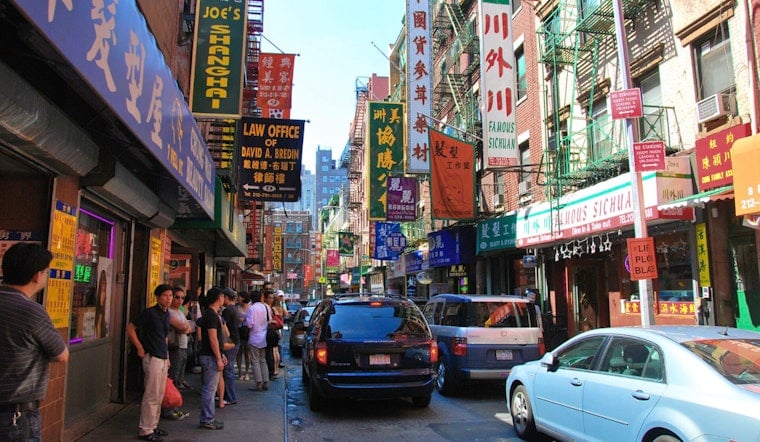
Chinese immigrants have edged past Dominicans to become New York City’s largest foreign-born community, according to city officials, reshaping neighborhood dynamics from Flushing to East Flatbush and stirring new questions about housing, services and political clout.
According to the Department of City Planning's Newest New Yorkers report, the city’s Chinese-born population reached about 397,000 in 2023, while the Dominican-born population slipped to roughly 390,000. Those groups now account for about 12.8% and 12.6%, respectively, of an estimated 3.1 million foreign-born New Yorkers. The 235-page report is designed to steer city agencies on everything from language access to healthcare and other immigrant services.
Neighborhood winners and losers
Flushing-Murray Hill now tops all city neighborhoods for foreign-born residents with nearly 96,000, while East Flatbush counts about 75,000. The numbers show where new arrivals are putting down roots and where long-established communities are thinning out. Traditional immigrant hubs such as Astoria and Jackson Heights saw sizable drops, and Brooklyn overall lost some 45,000 foreign-born residents over the past decade. Staten Island stood out as the only borough to record significant immigrant growth. According to Gothamist, the city’s newcomer map is being redrawn in real time.
Why the counts shifted
A CUNY analysis found that nearly 100,000 Dominicans left New York City between 2021 and 2023, a trend researchers link to affordability pressures and moves to other states. The Department of City Planning report also underscores sharp income gaps between communities: it shows a median household income near $60,000 for Chinese households compared with about $36,000 for Dominican households. Experts say those differences shape who can hang on in an unforgiving housing market, helping explain how the Chinese-born population pulled slightly ahead.
What it means for politics and services
Political scientists say the demographic reshuffle is likely to ripple through city politics. An analysis of 2024 data cited in recent reporting found the foreign-born population from China, Hong Kong and Taiwan was about 27,000 larger than the Dominican foreign-born population, a gap that could gradually shift voting patterns and representation. Community leaders quoted in that coverage cautioned against treating the numbers as a zero-sum scorecard, arguing that resources and outreach simply need to follow where people are actually living and working. Gothamist reported those analyses and reactions.
For now, the report is a snapshot, not a destiny. Migration flows, housing costs and policy decisions will continue to shape which communities grow and which contract. City planners, elected officials and neighborhood groups will be poring over the data as they decide where to focus services and funding in the year ahead.




