

























































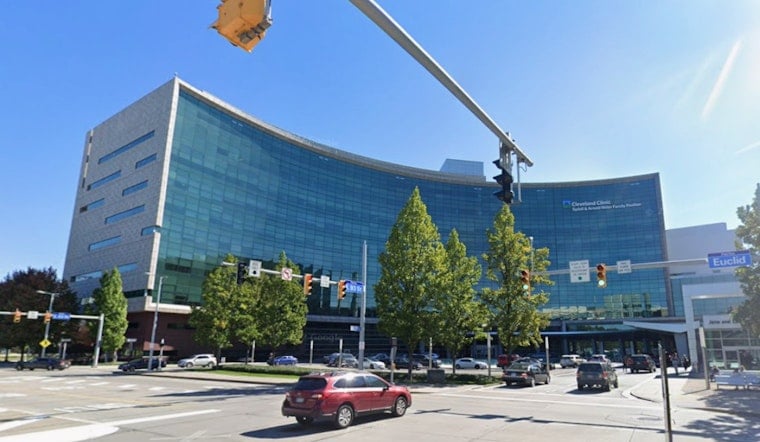
Cleveland just quietly notched a medical first: Cleveland Clinic surgeons have completed the health system's first robotic lung transplant in the United States, performing a single-lung operation in May on a man in his 70s with pulmonary fibrosis. The patient was discharged and is recovering, hospital officials said. The surgery was led by Dr. Gregory Jones with support from Dr. Kenneth McCurry, surgical director of lung transplantation.
How the operation worked
In a news release via Cleveland Clinic, the health system said surgeons used small incisions, robotic instruments and 3D visualization to perform the transplant through a minimally invasive approach. The hospital said that method can reduce postoperative pain and shorten hospital stays for select patients. Clinic spokespeople described the technique as an additional option for some transplant candidates.
What the surgeons said
“This achievement reflects the collaboration and innovation across our transplant and surgical teams,” Dr. Kenneth McCurry said in the release via Cleveland Clinic. Dr. Gregory Jones, who led the procedure, said the work builds on the Clinic’s robotic and transplant experience and adds a minimally invasive option for some patients, the announcement said. In other words, the team is layering new technology on top of years of experience rather than replacing what already works.
How this fits nationally
Robotic lung transplants remain rare but are being adopted at a handful of centers. Cedars-Sinai published its early experience after performing what it describes as the world’s first robotic lung transplant in 2021 in a PubMed Central report, and Becker’s Hospital Review covered NYU Langone’s fully robotic procedure in 2024. Cleveland Clinic is now stepping into that small club, adding its name to a short but closely watched list.
Cleveland Clinic’s program and local experience
The Clinic’s lung transplant program has performed more than 2,500 transplants since 1990, according to its program page, a volume that gives the center broad experience with complex cases. That institutional depth is part of why the health system is now adding robotic techniques to its roster of transplant approaches, rather than treating this as a one-off stunt.
Who might be a candidate
Hospital officials cautioned that the robotic option will not be appropriate for every patient and will be offered only to select candidates. Cleveland Clinic’s Abu Dhabi campus, which performed robotic lung transplants in 2025, has noted the approach can be useful for frailer patients and that teams sometimes use extracorporeal membrane oxygenation (ECMO) in high-risk cases, the Abu Dhabi site details that experience. The Cleveland team is taking a similar tack, framing the robot as one more tool in a fairly crowded surgical toolbox.
Clinic leaders said they will monitor outcomes as the program adds the robotic option and that conventional open transplantation remains a core part of care. Local outlets such as Spectrum News 1 have published the hospital statement and the initial patient update, and transplant leaders say broader adoption will depend on long-term outcomes and surgeon training. For now, Cleveland has logged a notable first while keeping one eye firmly on the data.





