

























































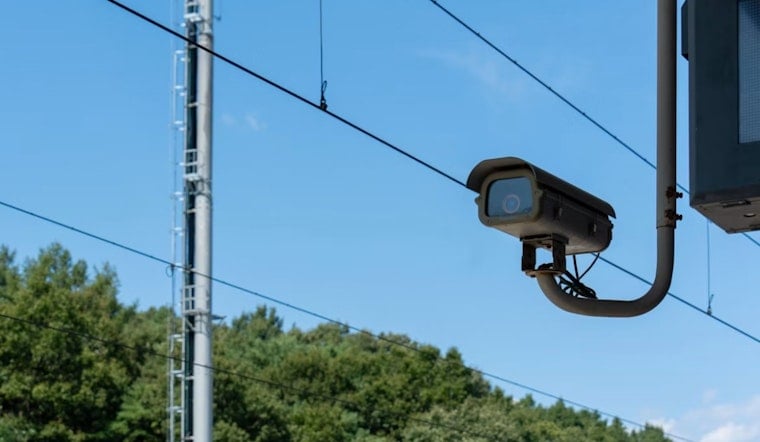
Stow's finance committee has signed off on extending the city's contract for 16 Flock Safety license-plate reader cameras for two more years, even as a growing petition and pointed public comments push back against the surveillance network. The cameras, which the city bought in 2024, cost Stow $48,000 a year to keep running, and officials say they've already helped police crack several cases — from thefts to an aggravated menacing complaint.
The finance committee's approval of a two-year continuation with Flock Group Inc. moves the contract toward a fuller council vote, according to Cleveland.com. Stow originally paid $58,400 for the initial cameras and installation in 2024, and the cameras are limited to identifying vehicles and reading license plates rather than facial recognition. Stow police have said the system has aided investigations involving thefts, assaults and missing people, and city officials point to cases like a suspect vehicle identified after an item worth an estimated $1,200 was destroyed at Stow-Munroe Falls High School.
Not everyone in town is convinced the benefits are worth the tradeoff. An online petition opposing the cameras, created by Ryan Levay and titled DeFlock Stow Ohio, has gathered about 275 signatures. At a June meeting, one Munroe Falls resident named Riley told council the cameras intrude on residents' privacy, disturb their peace, and represent government control.
Officials Defend the Cameras' Track Record
City officials have leaned on specific investigative wins to make their case. Flock has helped identify a vehicle involved in an aggravated menacing case in Stow, and cameras elsewhere in the network helped find a suspect in the stabbing of his girlfriend in Canton. Council member Kyle Herman acknowledged there are legitimate concerns about abusive use of Stow's Flock data, but said he believes the technology's public safety benefits outweigh the potential risks.
Other local voices echoed that view. Heather Prusha said Flock gives Stow police a reliable investigative tool, and Christian Costello called it a useful tool for departments trying to solve crimes. Resident Cyle Feldman told council in June that people should support resident safety. Herman and fellow council member Kelly Coffee also took part in a virtual meeting with Flock CEO Garrett Langley and other Ohio agencies earlier this month, according to the same city council proceedings.
ACLU Points to Data-Sharing and Retention Risks
The ACLU of Ohio's objections center less on any single camera and more on the broader system of automated license plate readers, or ALPRs, spreading across the region. Sean McCann of the ACLU said the pervasive presence of ALPRs is the basis of the organization's opposition, and that safeguards depend heavily on individual agencies policing their own use of the information. The ACLU is concerned about what data gets collected on where vehicles travel, how long that information is retained, and which outside agencies can access it — concerns the group has raised in testimony pushing for binding local ordinances rather than internal police policy, as WOSU Public Media has reported. The organization broadly supports laws restricting how Flock systems can be used and how long captured data can be retained.
Flock's own system architecture defaults to storing license plate scans and vehicle characteristics on cloud servers for 30 days before automatically purging them, though cities can set stricter limits, per Who Approved This. Flock officials have said settings can be adjusted to prevent Stow's data from being shared with outside agencies, addressing one of the more common fears raised by critics. The system itself identifies vehicles using make, body style, color, bumper stickers and window stickers in addition to license plates.
Stow Isn't Alone in the Region
Stow is one of several communities in the area relying on Flock services, alongside Twinsburg and Northfield. Nearby, the Macedonia Police Department operates 10 license plate readers and two live-feed security cameras, sharing data with surrounding municipal law enforcement agencies, though it does not use facial recognition with its system. Macedonia's Flock cameras have helped identify vehicles tied to thefts and shoplifting cases.
The debate playing out in Stow mirrors fights happening across Ohio. In Norwalk, residents have demanded an end to their city's eight-camera contract over mass surveillance fears, while Medina renewed its subscription after police cited solved property crimes. Two Reynoldsburg officers resigned in July amid an internal probe into alleged personal searches of that department's Flock system, and a Columbus officer was separately disciplined for using the cameras to investigate his own crash. Cleveland, meanwhile, approved only a temporary six-month extension of its own Flock deal while it fields resident objections and weighs competitive bidding.
Those misuse cases aren't isolated to Ohio. A national investigation reported in August identified at least 50 law enforcement officers accused or charged with misusing license plate reader systems, with 46 of those cases specifically involving Flock's database, according to Ground News. Under Ohio Revised Code § 2913.04, knowingly accessing or sharing law enforcement database information beyond authorized duties is a fifth-degree felony. As Stow's council weighs the two-year extension, that backdrop of documented misuse elsewhere — set against local officials' insistence that the cameras have solved real cases — is likely to shape how residents and council members ultimately come down on the vote.





