

























































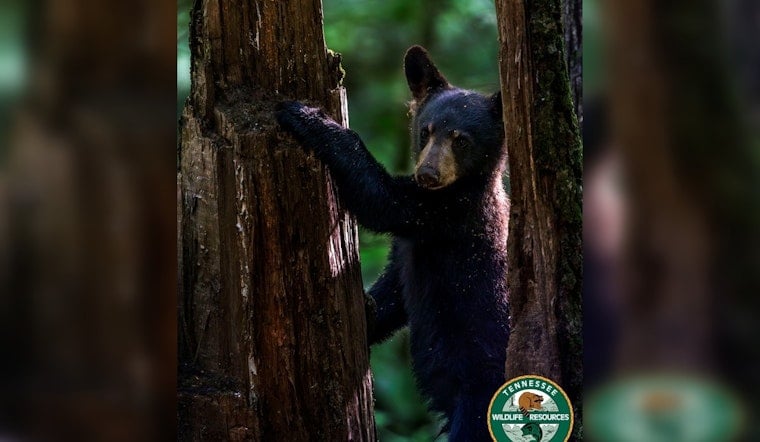
That "collar" spotted on a Maryville bear this week is not a sign of someone keeping a wild pet. Wildlife officials say it is a GPS tracking unit on a mother bear that recently denned under a vacant house, then had to be moved with her four cubs into Great Smoky Mountains National Park.
According to wildlife staff, the family was first captured after the mother denned beneath the porch of a house slated for renovation. Biologists relocated her and the cubs to a new den inside the park, then fitted the mother with a GPS collar so they could confirm she stayed put until the cubs were old enough to emerge safely. Neighbors who photographed the bear later saw the device and started asking questions, prompting the agency to explain what the hardware was doing to a wild animal in the first place.
TWRA confirms collar was for monitoring
The Tennessee Wildlife Resources Agency confirmed the device is a GPS tracking collar installed after the earlier relocation, as reported by WVLT. A TWRA spokesperson told the station, "She is like any other bear on the landscape; she simply selected an unsuitable den location this season." The agency says the collar lets biologists monitor den attendance and movements so they can step in only when a situation truly requires it. WVLT notes that the move was part of standard management meant to protect both nearby residents and the bears.
How to avoid attracting bears
TWRA also repeated the usual bear-smart advice for homeowners: do not feed or approach bears, secure garbage and recycling, remove bird and wildlife feeders and pet food, and keep grills and smokers clean. That playbook mirrors guidance from BearWise, which stresses that removing food attractants is the single best way to keep bears wild and neighborhoods calm.
Officials say simple steps, like using bear-resistant trash containers and bringing pet food inside overnight, can keep curious bears from turning into problem bears that come back again and again. When entire neighborhoods follow the same rules, a bear is far more likely to move on instead of learning that porches and driveways are easy buffets.
Why collars and relocations are used
Biologists rely on GPS collars to see where relocated animals travel and to judge whether a move actually solved the conflict. Recent tracking work in the Smokies has shown that relocated bears often roam long distances and sometimes return to the general area they came from. A report highlighted by the National Park Foundation found that many relocated bears either die within months or wander far afield, underscoring that relocation is a limited tool, not a magic fix.
Great Smoky Mountains National Park notes that bears are especially active in spring and that managers track problem animals to guide how they respond. Agencies say collars help them make better decisions while responders and residents work on the root issue: reducing the human-made food sources that attract bears in the first place.
What Maryville residents should watch for
For Maryville residents, seeing a bear in the yard is not an automatic emergency, but it is a cue to give the animal space and lock things down. People who spot a bear near homes are urged to keep their distance, secure anything that might smell like food, and report the sighting to local authorities. WVLT reports that the collared mother and her cubs were discovered only after they denned beneath the porch of a vacant house that was about to be renovated.
If a bear appears sick, injured, or aggressive, residents should contact local law enforcement or park officials so trained responders can step in. For non-emergency situations, neighbors can turn to BearWise and state wildlife guidance for tips on dialing down conflicts before they escalate. TWRA and park biologists emphasize patience and prevention: a mother bear with cubs is simply doing what bears do, and keeping human food away from them is still the best outcome for both people and wildlife.





