

























































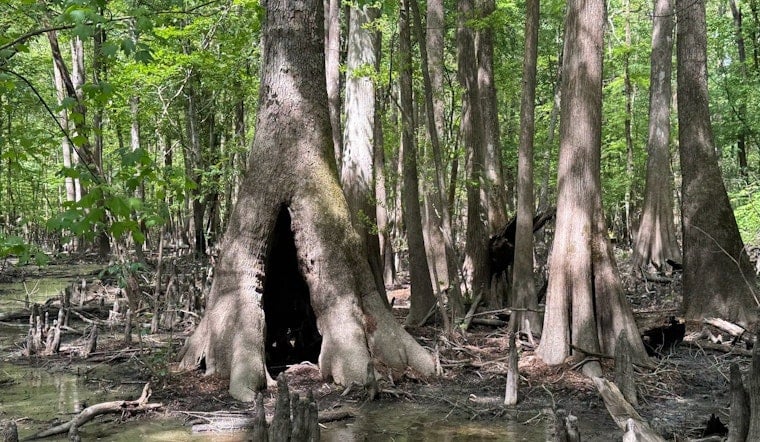
Triangle Land Conservancy has locked down more than 800 acres of mature bottomland hardwood forest and wetlands along the Neuse River in Johnston County, preserving a major swath of the region’s lowgrounds. County officials say the purchase, reported at about $4.6 million, protects old-growth trees, oxbow lakes and culturally sensitive sites on land long eyed by conservationists. Conservancy leaders and local officials say the acquisition bolsters wildlife habitat, improves water quality downstream and reduces flood risk for communities along the river.
What Was Acquired and Why It Matters
According to Johnston County Government, the tract, described by partners as the Neuse Islands wilderness, covers roughly 800 acres south of Smithfield and will be added to the Richardson Bridge Bottomlands natural area. The county says the land sits about five miles downstream from the Howell Woods preserve and the larger Brogden Bottomlands property, stitching into an existing corridor of protected floodplain. Officials call the parcel one of the Triangle’s last intact stands of bottomland hardwood forest.
Ecologically, the lowgrounds are notable for intact cypress gum swamp, oxbow lakes and mature bottomland hardwoods that provide rare, contiguous habitat. As outlined in the Brogden Bottomlands factsheet, the canopy is dominated by cherrybark and overcup oaks, swamp chestnut oak and red maple, while native rivercane and vernal pools support migrating birds, amphibians and other species.
Funding and Partners
Public and private partners pieced together the financing. The N.C. Land and Water Fund provisionally awarded more than $2.6 million to the project, and Johnston County contributed roughly $1.06 million toward the purchase, county records show. Triangle Land Conservancy donors and a U.S. Air Force flood-mitigation program upstream of Seymour Johnson Air Force Base covered the remainder, bringing the total reported acquisition price to about $4.6 million, the county said on Facebook. Conservation on this scale, it turns out, does not come cheap.
Access, Archaeology and Next Steps
Johnston County and Triangle Land Conservancy say the tract contains a historic Black cemetery, Native American archaeological deposits and evidence that parts of the land were used for rice cultivation more than two centuries ago. Triangle Land Conservancy plans to continue archaeological work with the Johnston County Heritage Center and a local archaeological group, and the conservancy has said it will lead some guided hikes later this fall as stewardship and access plans are developed. For now, TLC staff and county officials are focused on mapping sensitive sites and building a management plan before broader public access is opened.
“We can think of no better way to celebrate America’s 250th anniversary than to protect some of the forest that was there when our country was founded,” Leigh Ann Hammerbacher of Triangle Land Conservancy said in the county post. Johnston County Commission chair Patrick Harris added that “protecting these lands preserves wildlife habitat, improves water quality, helps reduce flooding, and ensures future generations will be able to enjoy and learn from this unique landscape,” according to the Johnston County Government Facebook post.
Context in Johnston County’s Conservation Push
This purchase follows recent conservation moves in the same lowgrounds: last month Triangle Land Conservancy transferred the 308-acre Rose Dairy tract to Johnston County for what officials say will become the county’s first nature preserve, complete with trails and water access, as reported by JoCo Report. Local officials and TLC staff say the Neuse lowgrounds acquisitions are part of a deliberate effort to protect water quality, reduce flood risk and preserve both natural and cultural resources for future generations, a signal that Johnston County intends to keep key stretches of the Neuse River valley wild.





