

























































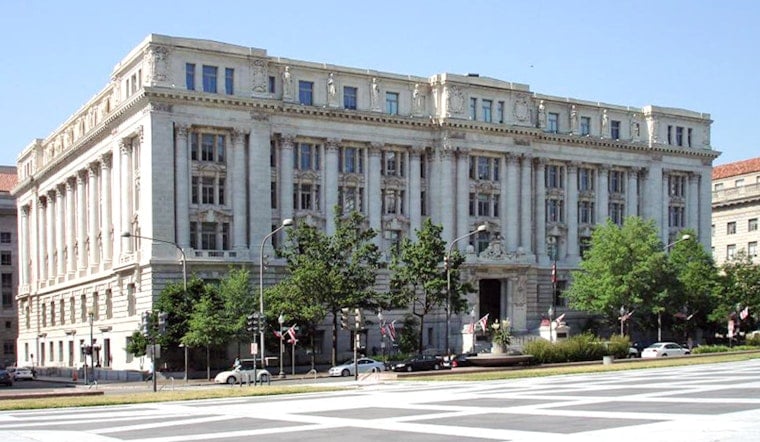
On June 5, 2026, the D.C. Council signed off on a permanent rewrite of the District’s Open Meetings Act that would let councilmembers gather behind closed doors so long as no official action is taken. The measure, approved on the first of two required votes, rolls a series of emergency and temporary tweaks into one long-term overhaul. Within hours, transparency advocates were warning that the carve-outs could supercharge backroom deal-making at the Wilson Building.
What The Council Approved
The bill keeps the core rule that any official action, including votes, must happen at a public meeting. At the same time, it spells out when a quorum of councilmembers can talk without that gathering being treated as a public meeting.
According to the Council of the District of Columbia, the permanent package consolidates earlier emergency and temporary amendments while adding procedures meant to balance openness with the Council’s need to coordinate. Lawmakers also adopted an amendment that requires after-the-fact public notice for certain gatherings that are not covered by the revised law.
Key Changes And Definitions
The legislation revises the statutory definition of a “meeting” and lists a series of exceptions. Those carve-outs include chance or social gatherings, press conferences, field trips, retreats, and briefings on potential terrorist activity or major public-health threats, provided no official action is taken during those sessions.
The new language also clarifies that a meeting is considered open if a public body takes steps reasonably calculated to allow the public to see or hear the discussion while it is happening, or as soon afterward as is technologically feasible. The statutory text and amendments are recorded in the D.C. Law Library.
Transparency Advocates Raise Alarm
Not everyone is sold on the Council’s idea of balance.
“Public access to government meetings is a cornerstone of our democracy,” Alicia Yass, policy advocacy director at the ACLU of the District of Columbia, said in a statement to ACLU-D.C.. The group urged councilmembers to keep exceptions narrow and warned that broad language could be used by future councils to move key policy discussions out of public view.
Context And Oversight
The Council has been tinkering with the Open Meetings Act for the past year through emergency and temporary bills, prompting critics to accuse lawmakers of reshaping transparency rules on the fly.
The debate has not stayed local. In 2025, Congress introduced a joint resolution disapproving earlier open-meetings amendments, a reminder that District laws can still be reviewed under the Home Rule Act, according to Congress.gov. That tug-of-war forms the backdrop for current arguments over whether the new language truly protects public oversight.
What Happens Next
The permanent bill still needs a second Council vote and action by the mayor before it can fully take effect. A related temporary measure, B26-0633, was approved by the Council in late May.
Legislative tracking shows B26-0633 was processed and enrolled in late May, while the Council has already signaled a packed schedule in June and July to wrap up the budget and other major business, per LegiScan and the Council’s own statement. That calendar suggests the next formal steps on the permanent rewrite could land in the coming weeks.
Legal Implications
The package amends several provisions of the Open Meetings Act, including the definition of “meeting” and the list of exceptions that let public bodies meet out of public view. Some of that language has already been in play on an emergency basis this spring, as reflected in the D.C. Law Library’s record of enacted amendments and effective dates.
Because the Home Rule Act gives Congress the power to review District laws, and because it has already flirted with disapproval once, the new framework could still face political or legal tests. Watchdogs and residents who believe the exceptions are stretched too far could pursue challenges or other oversight, leaving practical enforcement and real-world transparency as the next big fault lines in D.C.’s open-government fight.



