

























































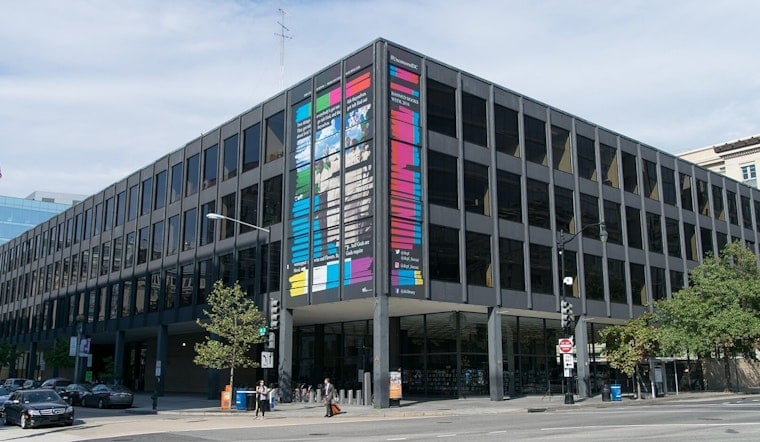
Rope barricades and police now mark the loggia outside Washington’s Martin Luther King Jr. Memorial Library, pushing roughly 60 unhoused residents away from one of downtown D.C.’s most reliable overnight refuges. The library’s 90-day enforcement pilot is already moving people onto exposed sidewalks, with the possibility of trespassing arrests looming next week.
The policy began taking shape July 6 with a two-week warning period, followed by yellow tape and then rope barriers around the loggia. Starting Monday, people who remain beneath the overhang after being told to leave could face arrest, according to Street Sense Media.
Library officials say the crackdown is intended to address complaints about urination, defecation, violence and theft, while reducing the time staff spend cleaning and preparing the area each morning. “Even with daily cleaning, the area under the loggia has become unwelcoming,” a D.C. Public Library spokesperson told Street Sense.
A Library Policy With Citywide Consequences
D.C. Public Library’s new Code of Conduct took effect Feb. 1 and applies to both library buildings and the outdoor grounds controlled by the system. The library describes the rules as a way to protect patrons, staff and facilities while emphasizing communication, de-escalation and fairness, according to DC Public Library’s overview.
But the detailed DCPL code prohibits lying down or taking up space intended for more than one person, and allows library staff, library police or Metropolitan Police Department officers to intervene. Failing to follow library rules can lead to a notice barring someone from every D.C. Public Library location for anywhere from one day to five years, along with the loss of access to library computers and other services.
This is not the first time the MLK Library has tried to clear sleeping residents from its property. Earlier Street Sense coverage documented a 2024 enforcement effort that included a 30-day overnight patrol and signs banning sleeping outside, though people continued gathering beneath the awning.
A Voucher Still Doesn’t Mean An Apartment
For some residents, the loggia has functioned as more than a place to sleep: It is a dry meeting point for outreach workers, a daytime escape from bad weather and a gateway to mail, computers and other basic services. The latest enforcement has forced people onto nearby sidewalks and other public spaces, which advocates say could make them harder to locate and connect with housing assistance.
One resident interviewed by Street Sense had received a housing voucher in May but was still waiting for an apartment because of inspection requirements and other delays. That gap is not unusual: The Lab@DC reported that households took an average of five to six months to move into housing after being matched with a voucher between 2023 and 2024.
The result is a familiar D.C. contradiction: A public institution can become cleaner and quieter for some users while becoming less usable for people with nowhere else to go. The barricades may change who is visible outside the library, but they do not resolve the shortage of safe overnight places or shorten the wait between receiving housing assistance and actually having a home.



