

























































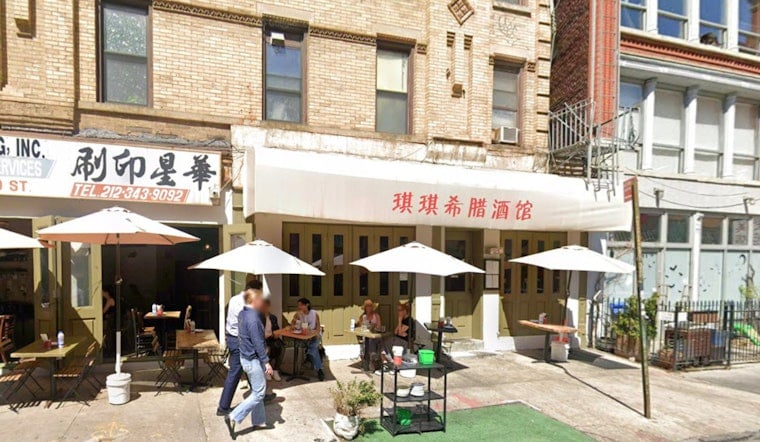
Kiki’s, the Greek restaurant long tied to the Dimes Square crowd, was seized by New York state on Tuesday, owner Pavlos Sierros confirmed, after authorities said the business racked up more than $1 million in unpaid tax liabilities. The move abruptly sidelined one of the Lower East Side’s better known late night hangouts, at least for now.
According to Bloomberg, a state tax warrant search uncovered the outstanding amount, and Sierros told the outlet that the property had been taken by the state. Bloomberg’s reporting notes that the debt is attributed to both the restaurant and its owner.
The spot has been a downtown staple for years, known for unfussy Greek plates, fried cheese and tzatziki, and the snaking lines that often spill onto Division Street. Neighborhood guides routinely cite Kiki’s as a Dimes Square anchor within the Lower East Side dining circuit, and The Infatuation highlights its Division Street address as central to its appeal and identity.
Public filings list the restaurant under the legal name SGRILL PLAN A GROUP LLC, with an open dining application that names Pavlos Sierros as an applicant. Manhattan Community Board 3 sidewalk and roadway records show applications that include licensing information and a Department of Health food service permit tied to the Division Street location. Those materials sit in the public record as part of routine neighborhood licensing and planning documentation.
Legal And Licensing Stakes
A state seizure over unpaid taxes can put a restaurant’s on premises license, lease and vendor relationships in a precarious spot while collections play out. Local liquor license listings and community board calendars show Kiki’s among recent filings that could be affected if the enforcement action continues, and the State Liquor Authority archive carries the venue’s license references.
Sierros confirmed the seizure to Bloomberg, while state tax officials and the restaurant have not issued public statements on what comes next. For now, it is unclear whether the owners plan to pay the outstanding balance, challenge the warrant or pursue some other route as the matter moves through the state collections process.




