

























































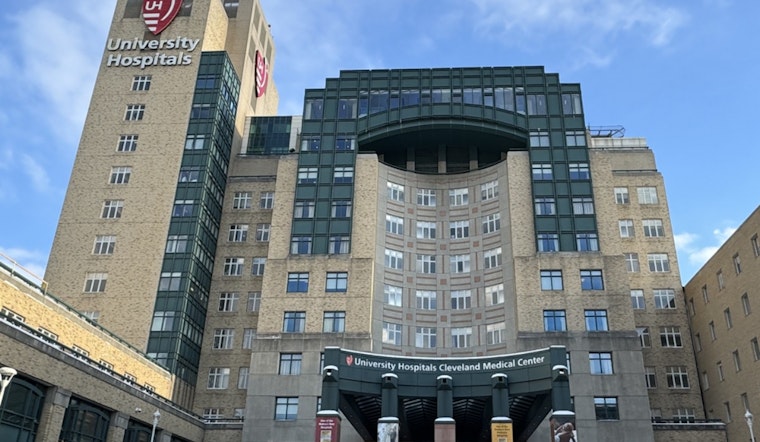
Natisha "Tish" Long spent years trapped in a cycle of searing facial pain and heavy meds that left her, in her words, "like a zombie." The 45-year-old Elyria mother and healthcare worker says that changed after a new minimally invasive trigeminal-nerve ablation at University Hospitals, using NeuroOne's OneRF system, wiped out her pain and cleared the drug-induced fog. The outpatient procedure brought rapid relief and let her return to her job and to everyday family life, after multiple medications and an earlier microvascular decompression surgery had only helped for a while.
Long first developed trigeminal neuralgia in 2018 and underwent microvascular decompression around 2021, a surgery that eased her symptoms for roughly two years before an even fiercer wave of pain hit, Cleveland.com reported. The drugs that followed dulled the agony but also drained her mentally and physically, she told reporters. Trigeminal neuralgia itself is rare yet notoriously intense. Johns Hopkins Medicine estimates about 15,000 new diagnoses a year in the United States and notes that the disorder is more often seen in women and typically later in life.
University Hospitals says it's first in world to offer OneRF
University Hospitals says it became the first health system anywhere to offer NeuroOne’s OneRF Trigeminal Nerve Ablation System and reported its first successful cases in December 2025, according to a news release from University Hospitals. In that announcement, the hospital said its first two patients experienced pain relief without complications and credited the device’s multi-contact design with helping surgeons target the problem area more precisely. “This new ablation probe is a step forward for our patients,” Dr. Michael Staudt said in the release.
How the OneRF treatment works
Company materials and federal filings describe a procedure that threads a thin radiofrequency probe through an insertion cannula to the trigeminal (Gasserian) ganglion, where controlled heat is used to lesion the nerve fibers that transmit pain. NeuroOne says its multi-contact probe design lets surgeons map and treat multiple nerve branches in one pass, instead of repeatedly waking the patient and repositioning the probe as with some older techniques, according to NeuroOne. The FDA’s 510(k) summary for the system (K251243) also details the cannula, temperature control features and other accessories that make up the probe kit.
Who might benefit and what patients report
As outlined in University Hospitals patient materials, likely candidates include people whose medications have stopped working, patients whose pain is centered in the cheek and jaw, older adults and those looking for a less invasive option than open brain surgery. Long told Cleveland.com that after the ablation she no longer needed the heavy medications and felt “back to 100 percent.” The hospital’s own account notes she was its first patient treated with the new technology and that her pain resolved quickly.
In a limited-market release on March 26, NeuroOne reported that 12 patients had been treated across three centers during the early rollout and described short procedure times and freedom from pain among those initial cases. At the same time, the company and participating clinicians stressed that these are small, early patient series and that longer-term follow-up will be crucial. The OneRF Trigeminal system received FDA 510(k) clearance in August 2025, and the filings and press releases indicate that broader use will depend on additional data, reimbursement decisions and growing clinical experience.



