

























































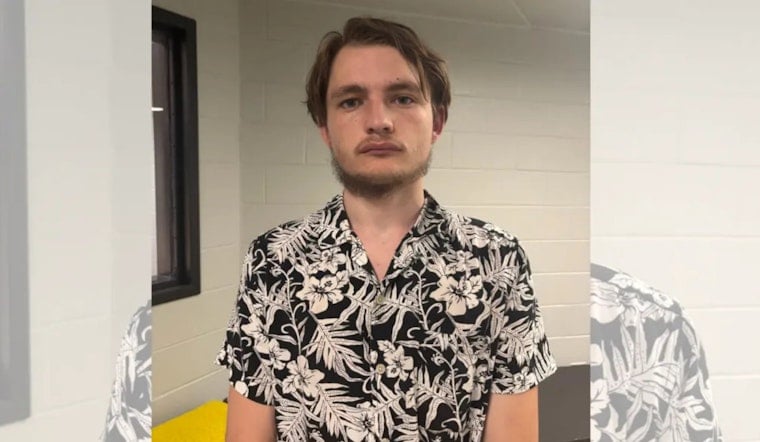
Kenneth Mellor, 20, of Palmdale, was arrested Wednesday in Pennsylvania after an eight-month FBI investigation that federal officials say uncovered a scheme to blackmail and coerce teenage girls into producing sexual images. Investigators allege Mellor posed online as peers or romantic partners, then pressured minors, including some as young as 9, to send explicit material. Authorities say roughly a dozen victims have been confirmed so far, with more than 10 additional potential victims still under review. The arrest followed a forensic review of digital devices seized from Mellor's home that investigators say revealed communications with numerous suspected victims.
As reported by NBC Los Angeles, the FBI opened its investigation in October 2025 after a reported 12-year-old victim was coerced into creating sexual content. Mellor was later arrested in Pennsylvania, and agents recovered devices that, after forensic review, allegedly tied him to communications with "numerous suspected victims." Federal authorities have asked anyone with information to call 1-800-CALL-FBI or submit tips at tips.fbi.gov. The complaint states Mellor faces a mandatory minimum of 15 years and up to 30 years in federal prison if convicted as charged.
How investigators say he groomed victims
"The complaint further alleges that Mellor frequently attempted to befriend and groom girls between the ages of 9 and 17 on a variety of online platforms by misrepresenting his age," the FBI said, per NBC Los Angeles. Investigators say he used gaming and social apps, including Roblox, Discord, Snapchat, Instagram, TikTok and WePlay, and relied on multiple online aliases to hide who he really was. The FBI also noted that at least one alleged victim may have attempted self-harm after being coerced.
What parents should know and where to report
Federal guidance warns that any image shared online can be saved, copied or recorded, and that predators often exploit gaming and messaging platforms to groom potential victims. The FBI's resources on sextortion urge families to preserve evidence, keep communication open with kids and report suspected exploitation to local law enforcement or directly to the FBI at 1-800-CALL-FBI or through the agency's online tip portal. The FBI and the National Center for Missing & Exploited Children provide reporting tools and detailed safety guides for parents and caregivers.
Why this matters
Reports of online enticement and sextortion have climbed sharply in recent years, putting heavy pressure on law enforcement and victim support systems. Federal and industry analyses emphasize that prevention hinges on digital literacy, stronger platform safety features and fast reporting when something looks off. For broader background and prevention guidance, see resources from the NTIA and NCMEC, including the NTIA.
Next steps in the case
The investigation remains active, and federal agents say more victims may be identified as they follow digital leads and review additional evidence. Authorities are again urging anyone with relevant information to contact the FBI at 1-800-CALL-FBI or submit a tip at tips.fbi.gov, and they are encouraging parents and caregivers to review the FBI and NCMEC online resources on internet safety and reporting suspected abuse.





