

























































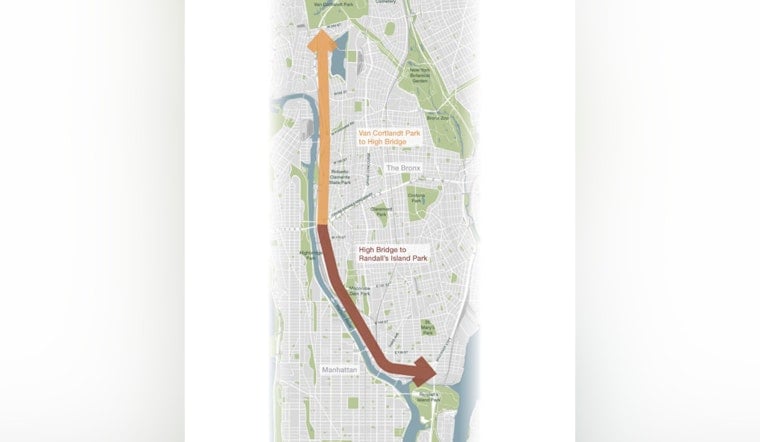
Top FDNY brass are trying to throw a red light on a planned stretch of the Bronx's Harlem River Greenway, arguing that a short one-way conversion on Sedgwick Avenue would slow engines and complicate emergency responses. A formal April letter from FDNY operations leadership and an in-person statement from a battalion chief at a June community board hearing have cranked up the dispute, putting DOT’s redesign - which aims to add a two-way protected bike lane on a crash-prone corridor - at risk.
FDNY raises response-time concerns
In an April 27 letter to the Department of Transportation, FDNY Chief of Operations Kevin F. Woods warned that converting Sedgwick Avenue between West Fordham Road and West 183rd Street to one-way southbound "would dramatically effect Engine 43's and Ladder 59's ability to respond" and could force apparatus onto mile-long detours. The one-page evaluation, submitted under Local Law 6, cites narrow detour streets and chronic double-parking as operational hazards; see FDNY letter (PDF).
DOT's safety case and project details
NYC DOT says the Sedgwick change is part of a 1.1-mile section along Bailey and Sedgwick that would extend the Harlem River Greenway, and that converting the 0.2-mile block south of Fordham would make room for a two-way, parking-protected bike lane and curb extensions. DOT’s presentation to local boards shows 179 people were injured on the Bailey–Sedgwick corridor from 2021–2025 and lists Cedar Avenue, Loring Place North and University Avenue as alternate northbound routes for drivers, as outlined in NYC DOT materials.
A battalion chief went public
At a Bronx Community Board 8 traffic meeting on June 18, Battalion Chief Liam Donnelly testified in uniform that the one-way conversion "is gonna cause an issue" and warned it could add "a half mile" or more to certain responses, echoing concerns in Woods’s letter. City Hall contested that FDNY and DOT worked collaboratively during the design process, but the public airing of the split has advocates worried the FDNY’s objections could stall the Bronx greenway, as reported by Streetsblog New York City.
Advocates push back
Advocates say road diets and protected lanes reduce crashes and, in many locations, create a clear path that emergency vehicles can use to bypass blocked traffic. "This work saves lives," said Ben Furnas of Transportation Alternatives, and local coverage has framed the project as part of a long-awaited river connection after the greenway broke ground last year; see Transportation Alternatives and greenway broke ground last year for background.
Process and next steps
The dispute unfolds against a statutory review: Local Law 6 requires DOT to consult the Fire Department on major redesigns, and both agencies say they will keep coordinating as the project moves through community review. With public hearings under way and construction for the corridor slated in DOT materials, the coming weeks of borough-level meetings could determine whether this greenway segment moves forward unchanged, is redesigned, or is delayed; see the City Council testimony that underpins the review process.
The showdown highlights a larger tug-of-war over street design in New York City, pitting fire-rescue logistics and parked-car realities against a push to cut crashes and expand bike access. For Bronx riders and residents, the immediate question is whether a short block on Sedgwick will become part of the greenway, or a flashpoint that slows its rollout.





