

























































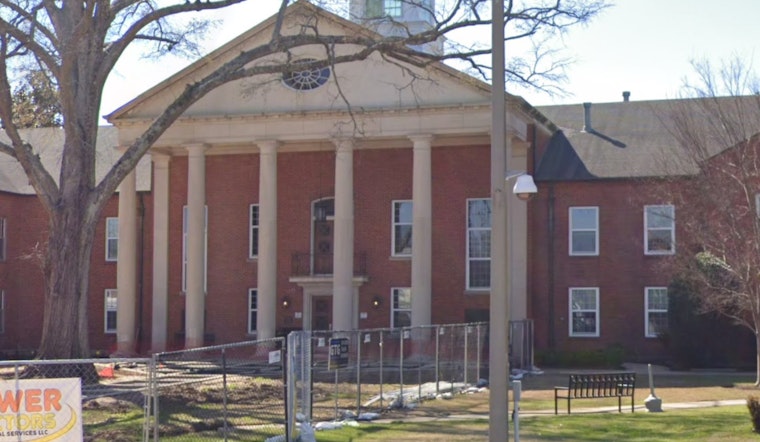
A federal judge on Wednesday shut down a high-profile push to redraw DeSoto County supervisor districts to create majority-Black seats, ruling that plaintiffs failed to meet the legal standard under the Voting Rights Act. The decision keeps the county's 2022 district map in place and denies both a new set of lines and the special elections civil-rights groups had urged the court to order.
Judge's ruling in Harris v. DeSoto County
U.S. District Judge Glen H. Davidson, presiding over Harris v. DeSoto County, wrote that "plaintiffs cannot prove their claims for vote dilution pursuant to Section 2 of the Voting Rights Act, and judgment must be awarded to defendants," finding that the trial record did not show intentional dilution. That language and the outcome were reported by The Washington Post.
Plaintiffs and what they asked the court to do
The lawsuit, filed in September 2024 by the Legal Defense Fund, the ACLU of Mississippi, the Harvard Election Law Clinic and local community groups, argued that the 2022 supervisor map packed and cracked Black voters in a way that denied them a fair chance to elect candidates of their choice. The plaintiffs urged the court to throw out the map, impose a new redistricting plan and order special elections for the board of supervisors and several other local offices, according to a press release from the Legal Defense Fund.
Local reaction
The ACLU of Mississippi labeled the ruling "deeply disappointing" and said recent Supreme Court guidance has made it significantly harder to win Section 2 cases, according to the group's statement. County advocates and plaintiffs' lawyers cast the DeSoto fight as part of a broader test of how courts now weigh evidence in voting-rights cases after recent Supreme Court redistricting decisions. DeSoto's attorneys pushed back, and the county's defense team echoed what The Washington Post reported: local Republicans framed the lawsuit as partisan politics, a view voiced by the state GOP chairman who represented the county in the case.
Why the Supreme Court's Callais decision matters here
The DeSoto ruling arrived in the wake of the U.S. Supreme Court's decision in Louisiana v. Callais, which reshaped how Section 2 claims are evaluated and, legal analysts say, raised the evidentiary bar for proving vote dilution. Legal observers note that lower courts are now zeroing in on present-day intent and insisting on more exacting applications of the Section 2 framework, a shift explained in analysis from the Brennan Center for Justice.
What this means for DeSoto County
DeSoto County, just south of Memphis, has exploded in population, with roughly 190,000 residents and a Black population of about 30 percent. Plaintiffs and local reporting note that the supervisor-district plan at issue effectively controls the election of 25 county officials, and under that map not a single one of those offices is currently held by a Black official. Plaintiffs' filings and local coverage detail how communities like Horn Lake were split across supervisor districts, which plaintiffs say stripped Black voters of a real opportunity to elect candidates they prefer. For more on how the fight began, see earlier coverage from Mississippi Today and local reporting such as NAACP Sues DeSoto County.
Where this goes from here
The judge's order settles the immediate question of a court-ordered map and special elections, at least for now. Civil-rights groups said the ruling highlights what they see as a rapidly narrowing window for Section 2 challenges after Callais and signaled that they plan to keep pressing for remedies both in court and at the ballot box, according to the ACLU of Mississippi. Observers say the DeSoto outcome is likely to become a reference point for other local redistricting battles across the South as judges work out how to apply the post-Callais standard for proving vote dilution. The ACLU of Mississippi called the decision disheartening but described it as one chapter in a longer fight over what fair maps should look like in the county.


