

























































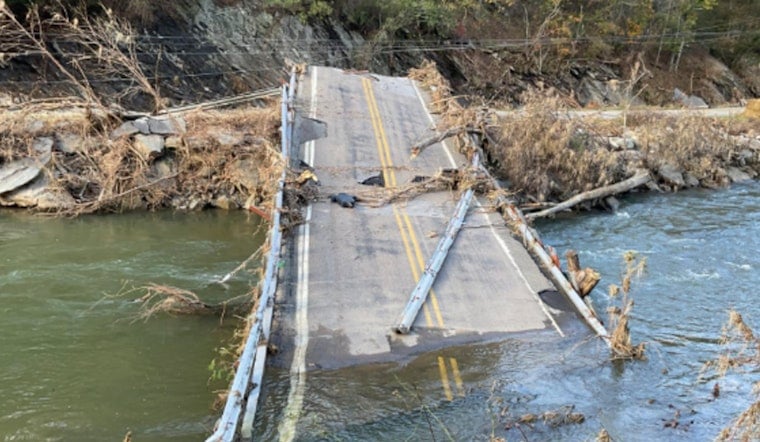
After months of waiting and fronting their own repair bills, communities in western North Carolina are finally seeing a major payout. FEMA has signed off on roughly $45 million this week to support more than 40 recovery and mitigation projects across the state, a targeted surge of federal money aimed at fixing storm-battered roads, utilities and repeatedly flooded properties left behind by Hurricane Helene. The grants cover state agencies and small towns that have already started work and are counting on federal reimbursement to keep going. Officials say the package will fund debris removal, bridge and road repairs, buyouts and emergency protective measures that are key to reconnecting isolated communities and shielding them from the next round of high water.
Where the money is headed
As reported by WCNC, the roughly $45 million package covers more than 40 recovery and mitigation efforts around North Carolina. The outlet details major awards that include about $19.3 million to North Carolina Emergency Management for debris removal and roughly $8.8 million to the N.C. Department of Transportation for road and bridge work. The list also runs through smaller mountain-town allocations, such as $1.6 million for the Town of Lake Lure and $1.5 million for Montreat.
Other checks in the package target schools, nonprofits and local infrastructure. According to WCNC, that includes roughly $1.5 million to Watauga County Schools and $1.5 million for repairs to Asheville Christian Academy’s main soccer field. There is also a $1.2 million pedestrian-bridge repair in Black Mountain and a $1.1 million emergency-protective-measures award to the Cathedral of All Souls. WCNC notes that Transylvania County is in line for a Hazard Mitigation Grant Program acquisition project with at least a 75% federal cost share, as well as a separate $919,000 approval for acquisition and demolition there.
Part of a larger, slow-moving recovery
This $45 million batch is only one slice of a much larger recovery pie. It arrives in the middle of a series of recent FEMA releases that together add up to hundreds of millions of dollars as the agency works through a backlog of Helene-related projects. Public radio coverage by WUNC has tracked several earlier rounds of obligations that have been slow to roll out.
State and local leaders have been pressing FEMA to move more quickly, and the agency has been issuing many Public Assistance awards for Helene work at an elevated federal cost share, in many cases no less than 90%, to help communities get reimbursed faster, The Charlotte Observer reports.
Local officials say it will unlock stalled work
Mountain counties and town halls that have been juggling recovery invoices greeted the new approvals as a financial release valve. Local leaders say the reimbursements are essential to paying contractors and restarting projects that municipalities covered up front while they waited for federal money to clear. Buncombe County’s Helene recovery office and other local hubs continue to coordinate buyouts, private-road reimbursements and repairs to schools, water systems and bridges, with county recovery pages laying out specific program details and timelines.
Town managers and public works directors have been urging residents to help keep the pipeline moving by documenting damage and hanging on to receipts. The more complete the paperwork, they say, the fewer avoidable delays when it hits FEMA’s desk.
How to apply and what to watch for
Residents with Hurricane Helene damage can apply for federal assistance at disasterassistance.gov and are encouraged to keep an eye on county recovery pages for Hazard Mitigation Grant Program application windows and buyout listings. Officials caution that mitigation projects and property acquisitions can take months to move from approval to closing, so homeowners and nonprofits are advised to keep thorough records, stay in regular contact with local recovery staff and follow up if reimbursements or decisions appear to stall.





