

























































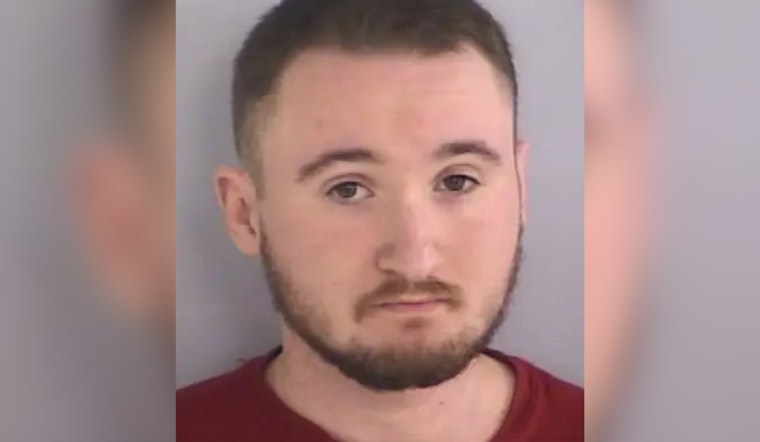
Federal prosecutors want a judge to force Tres Genco, the Hillsboro man who pleaded guilty to plotting a mass attack on women, to move farther away from college life in Ohio after he settled into a home just off The Ohio State University campus. The Justice Department says the new address raised fresh safety alarms because Genco had previously surveilled campuses and written violent manifestos targeting women. A judge is set to hear the government’s request on June 25.
What The Justice Department Is Asking For
In a motion filed May 26, prosecutors asked the court to change the terms of Genco’s supervised release so that he cannot live within two miles of any college or university in Ohio, and to add several related restrictions. Court records state that Genco was released from federal custody on April 30 and, on May 14, moved to a residence two blocks from the OSU campus, a decision prosecutors described as “intentionally provocative and unsafe.”
An Ohio State spokesperson told WBNS-TV (10TV) that the university backs the Justice Department’s motion and considers student safety its top priority.
Records Show Weapons, Manifestos And Surveillance
The case traces back to March 2020, when Highland County deputies responded to a call and found an AR-15-style rifle with a bump stock, several loaded magazines, body armor, and a modified Glock pistol hidden in a heating vent, according to a U.S. Department of Justice press release. Prosecutors say Genco maintained an active online “incel” presence, wrote a manifesto vowing to “slaughter” women, and left a note indicating he hoped to kill as many as 3,000 people. He later pleaded guilty to attempting to commit a hate crime and was sentenced in federal court, as detailed in Justice Department materials.
Prosecutors And Defense Spar Over Residency Limits
Prosecutors told the court that a probation officer inspected Genco’s chosen residence and flagged its proximity to campus as a serious concern. Genco’s attorney countered that if the government wanted residency restrictions, it could have sought them before supervised release began instead of waiting until after he moved, according to court filings.
The motion asks for a blanket two-mile buffer around any college or university in Ohio for as long as Genco is on supervised release. Both sides are expected to argue their positions at the June 25 hearing, as reported by WBNS-TV (10TV).
How Courts Can Change Supervised-Release Terms
Federal judges have the authority to modify, expand, or revoke supervised-release conditions when an individualized assessment shows it is appropriate, including by adding travel or residency limits. Before changing terms, courts look at public-safety factors and consult probation officers, defense counsel, and prosecutors. The statutory framework for adjusting supervised release conditions is outlined on Congress.gov.
If a judge later finds that a person on supervision has violated the conditions, the court can revoke supervised release and order additional confinement, within the limits set by law.
Why This Fight Matters In Columbus
The Justice Department’s motion lays bare the usual tug-of-war between public safety and the goals of reentry. Campus officials are framing the request as a precaution for students and staff. Defense counsel, on the other hand, is pointing to strict geographic limits on housing as a significant hurdle for someone trying to reintegrate after prison.
Whatever the judge decides will not just affect the immediate security posture around OSU. It could also shape how courts in Ohio handle similar residency questions for high-risk defendants in the future.
What Happens Next
The federal court is set to hear arguments and review filings on June 25 before deciding whether to impose the two-mile residency rule or another set of conditions. If the motion is granted, the ruling could include limits on where Genco can live or travel, or even electronic monitoring requirements, all aimed at keeping a closer watch while he is on supervised release.




