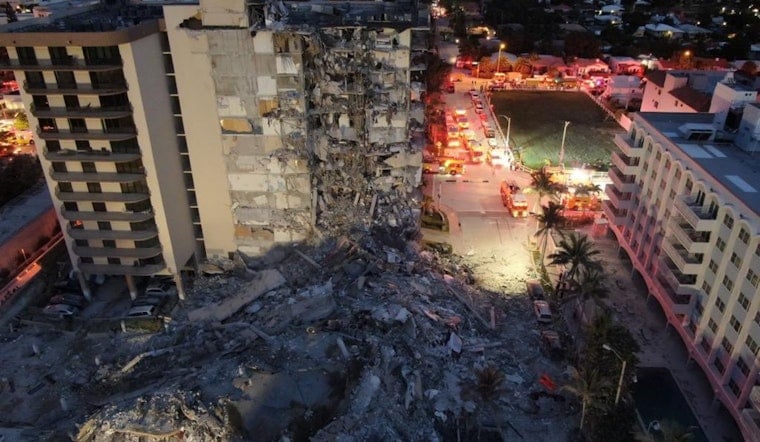
Florida is closing in on the fifth anniversary of the Champlain Towers South collapse, and engineers say the state is still leaving tens of thousands of condo residents in a risky gray zone between inspections. The new rules may have tightened oversight, but they mostly deliver snapshots in time, not a running safety check. In salty, humid coastal environments where concrete ages fast and corrosion can snowball out of sight, that gap can be the difference between catching a problem early and discovering it when it is already critical.
Greg Batista, a Fort Lauderdale structural engineer with more than 35 years of experience, told Tampa Free Press that Florida has “done the hard part” by finally passing milestone-inspection laws. The catch, he said, is that the system still depends on periodic checkups. Batista warned that “Corrosion is inevitable in coastal concrete buildings,” and the real test is whether officials are willing to watch continuously and act on what better monitoring might reveal.
What the State Changed and What It Did Not
After Surfside, lawmakers rushed through a slate of condo-safety measures, most prominently SB 4‑D. That law created mandatory milestone inspections and required Structural Integrity Reserve Studies for many condominium buildings. Milestone inspections start with a visual Phase 1 review, followed by a more invasive Phase 2 if inspectors see signs of deterioration. SIRS, meanwhile, push condo associations to identify major structural components, estimate their remaining life and start putting real money aside for repairs instead of hoping future boards will figure it out.
Why Snapshots Can Miss Danger
Federal investigators and lab tests help explain why engineers are so uneasy about long gaps between those inspections. The National Institute of Standards & Technology has been testing concrete cores and corroded rebar from Champlain Towers South as part of its probe and has documented chloride intrusion and how corrosion can rapidly weaken structural elements over time, according to NIST. Reporting has also highlighted how investigators have homed in on pool-deck and garage support flaws as leading hypotheses in the collapse, and AP notes the disaster killed 98 people on June 24, 2021.
The worry is simple enough. If the structure is quietly degrading every day and you only take a good look every decade or so, you are betting that the damage will not cross a dangerous threshold in the meantime. In coastal Florida, that is arguably an optimistic bet.
Sensors, International Examples and What They Would Watch For
Modern structural-health monitoring systems offer a different model. They can track strain, vibration, moisture and even active corrosion around the clock, turning the occasional inspection into a continuous stream of engineering data. Instead of waiting for a crack to become obvious to the naked eye, sensors can flag subtle changes that suggest something is going wrong inside the concrete long before a resident or property manager would ever notice.
An international review notes that continuous monitoring is already standard practice in some jurisdictions, and technical literature points to China’s GB 50982 national code as a notable example of mandatory structural-monitoring standards. Those details are laid out in an international review by IEA‑4E along with a technical study of GB 50982. The message for Florida is not that it needs to copy China’s rulebook wholesale, but that continuous monitoring is no longer some sci-fi experiment.
What Boards and Buyers Are Up Against
For condo boards and unit owners, the new reserve-study rules are hitting where it hurts: the wallet. Florida’s SIRS framework forces associations to identify key structural components and fund baseline reserves for them, and property analysts say those requirements have already driven higher assessments and stricter disclosure practices; see a practical guide from PropFusion. Buyers who once skimmed condo documents are now combing through reserve studies to see whether they are walking into a future special-assessment storm.
Legal summaries underscore that SIRS funding is not something owners can simply vote to waive, and that officers who disregard inspection and funding rules may be exposing themselves to fiduciary liability. Local building-safety agencies also have enforcement tools when a Phase 2 inspection finds significant deterioration, according to analysis from LegalClarity. In other words, boards that ignore the new regime are not just tempting fate with the building; they could be tempting it in court.
Where Policy Could Go Next
Engineers like Batista argue that the logical next step is to blend Florida’s fixed inspection schedule with targeted continuous monitoring in the highest-risk buildings. That shift would not be simple. It would require standards to decide which structures qualify, protocols for collecting and interpreting the data, and money for both the hardware and the experts who would watch the numbers.
Even so, Batista told Tampa Free Press that the goal should be “continuous oversight, not just periodic snapshots,” a philosophy echoed in international examples and technical reviews. In that view, inspections become anchor points in a much denser web of information instead of lonely events every few years.
As the Surfside anniversary approaches, the tension between Florida’s tougher new rules and the limits of periodic inspections is turning into both a technical argument and a political fight. State law has undeniably closed important gaps. For many engineers, though, the key move still ahead is to swap one-off snapshots for an almost real-time conversation among sensors, structural experts and the people who sleep every night inside these aging concrete towers.