

























































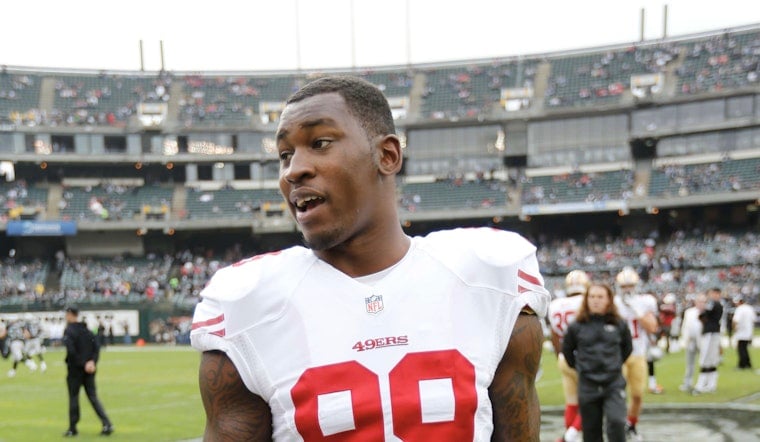
Aldon Smith, the ferocious pass rusher who authored one of the most dominant two-year stretches the San Francisco 49ers have ever seen before a long and public struggle pulled him away from the game, has died at 36. The team announced his death Saturday afternoon, calling it sudden and tragic and remembering the smile that, by every account, filled a room before Smith ever said a word. For a generation of Niners fans, the news lands like a gut punch — and like the closing of a story that always felt unfinished.
The Santa Clara County Medical Examiner's office confirmed that Smith was pronounced dead Saturday at Good Samaritan Hospital in San Jose, with a cause and manner of death pending the completion of its investigation, according to the Press Democrat. The 49ers did not disclose a cause in their statement, as reported by ESPN. He was 36.
A two-year peak almost no one has matched
It is hard to overstate how good Smith was, right away. The seventh overall pick out of Missouri in 2011, he posted 14 sacks as a rookie — at the time the second-most ever by a first-year player — and finished runner-up to Von Miller for Defensive Rookie of the Year, per Yahoo Sports. Then he got better. His 19.5 sacks in 2012 remain the 49ers' single-season franchise record, earning him first-team All-Pro honors and a Pro Bowl nod.
Put those seasons together and you get a number that still stops you: 33.5 sacks in his first two years, the most by any player in his first two NFL seasons. He anchored a defense that reached three straight NFC Championship games and started Super Bowl XLVII against the Baltimore Ravens. For about 30 games, Smith looked like the best young defender in football, full stop.
The struggles, told plainly
What followed is impossible to leave out, and Smith himself never asked anyone to. His career was derailed by a years-long battle with substance abuse that produced what ESPN tallied as roughly 10 arrests over nine years, including multiple DUIs and a 2013 crash into a tree, along with NFL suspensions for violations of the league's substance-abuse and personal-conduct policies. The 49ers released him in August 2015 after another arrest.
He moved across the bay to the Raiders, who stood by him through a year-long suspension before a 2018 domestic-violence arrest ended his time in Oakland. "Aldon proudly wore the Silver and Black, was respected by his teammates and will be missed dearly," the Raiders said Saturday, per FOX Sports. After missing the better part of four seasons, he engineered a genuinely improbable comeback with the Dallas Cowboys in 2020, starting all 16 games at age 31 and notching five sacks.
A quieter final chapter
The most important part of Smith's story may be the part that never made a box score. In his post-playing years he worked as a recovery coach through his own venture, Intelligent Movement, and spoke openly about a sobriety journey he said began in late 2021, according to BlackSportsOnline. After everything the public watched him go through, he had turned toward helping other people climb out of the same hole.
That is the tension that makes Saturday's news hit so hard. Smith was, for years, the Bay Area's ultimate "what if" — the rare talent whose ceiling was a Hall of Fame and whose floor kept giving way beneath him. But the man his old teams chose to remember this weekend wasn't the rap sheet; it was the smile, the teammate, the comeback, and the late, hard-won work of getting well.
Born Aldon Jacarus Smith on September 25, 1989, he starred at the University of Missouri, where he was a First-Team All-Big 12 selection and the program's Defensive Lineman of the Year in 2010 before the 49ers made him a first-round pick. He finished his NFL career with 52.5 sacks across stops in San Francisco, Oakland and Dallas. He is survived by a family the 49ers asked fans to keep in their thoughts, and by a fan base that will always wonder how high that early ascent might have climbed.
Smith's death touches on addiction and recovery. If you or someone you know is struggling with substance use, the SAMHSA National Helpline is available 24/7 at 1-800-662-4357.





