

























































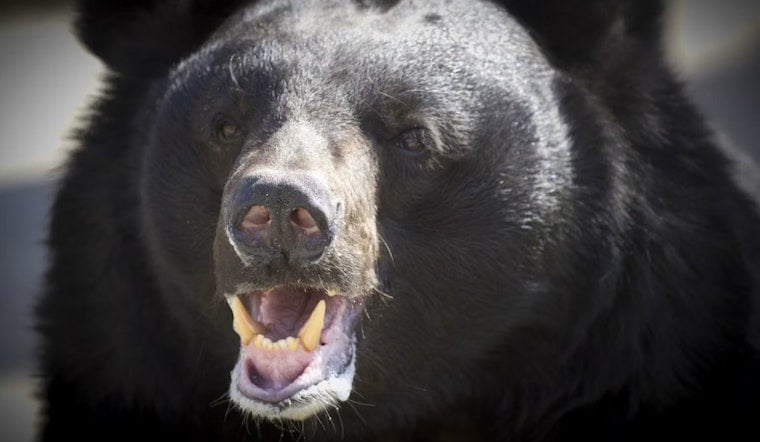
Neighbors in Ashtabula County knew there were black bears around, but not many expected one the size of a small car to wander through. Wildlife crews this week captured a massive black bear, fitted it with a radio collar, and released it, giving biologists a rare chance to track one of the biggest bruins seen in northeast Ohio.
Researchers Collared A 576-Pound Male In Ashtabula County
As reported by the Akron Beacon Journal, state wildlife staff working with University of Dayton researchers captured and collared the bear and measured it at about 576 pounds, roughly twice the average weight for black bears typically seen in Ohio. The collar will transmit location data that biologists can use to map the bear's travel and habitat use. Officials said the tagging is part of an ongoing effort to learn more about Ohio's recolonizing black bear population.
State Monitoring Shows Rising Sightings
According to the Ohio Department of Natural Resources Black Bear Monitoring Report, confirmed sightings reached record highs in 2025 and most animals observed in the state are dispersing or transient males. "These animals likely do not stay in the state long," the report states, noting 537 sightings across 69 counties last year.
University Of Dayton Is Tracking Bears
The University of Dayton's Gantchoff Lab is partnering with ODNR to fit GPS collars and collect biological samples so researchers can estimate home range, reproduction, and survival. The lab says the field team hopes to collar dozens of bears over the multi-year study. As detailed by the University of Dayton, collars record position data frequently and are designed to fall off after roughly 18 months, giving scientists high-resolution movement data without long-term burden on the animal.
Why Tracking A Giant Bear Matters
Researchers say collars provide near real-time movement data that can show whether a supersized transient is merely passing through or settling into local habitat. That information helps agencies target outreach and reduce attractants that draw bears into neighborhoods. Spectrum News 1 also reported on the capture and noted officials described the bear as a transient male.
How To Reduce Human-Bear Encounters
According to the Ohio Department of Natural Resources, homeowners should remove bird feeders, secure garbage indoors or in bear-resistant containers, and avoid leaving pet food outside, since food attractants are the leading cause of nuisance interactions. The agency also asks residents with photos or videos to contact their county wildlife officer or submit reports through state reporting tools so officers can investigate.
What To Watch For
Biologists will monitor the collar's data in the coming weeks to see where the bear travels and whether it remains in northeast Ohio. If you spot the animal, keep your distance and report sightings through the HuntFish OH app or the Division of Wildlife website, as noted by the Dayton Daily News.





