

























































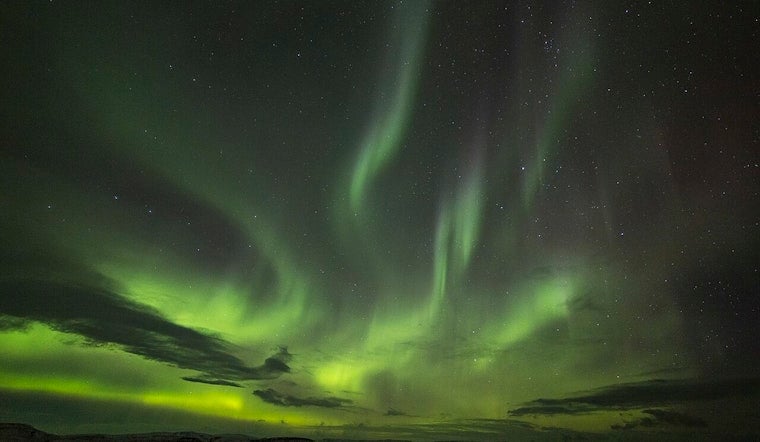
A fresh blast from the Sun could turn the night sky into a rare show for parts of the Lower 48, with the northern lights potentially dipping into the continental United States. The best shot arrives Monday night into early Tuesday as charged particles from a recent coronal mass ejection slam into Earth’s magnetic field. Whether you actually see any color overhead will come down to timing, cloud cover and just how dark your corner of the world gets.
NOAA's Space Weather Prediction Center is calling for a greatest expected three‑hour Kp index of 7.00 (a G3, Strong, geomagnetic storm) for Jun 07–Jun 09 and cautions that "Periods of G1‑G3 (Minor‑Strong) geomagnetic storming are likely on 08 Jun," tied to a coronal mass ejection that left the Sun on June 6, according to NOAA's Space Weather Prediction Center. A Kp of 7 opens the door for mid‑latitude aurora if the CME's magnetic field locks in cleanly with Earth's. The same bulletin also flags a modest chance of S‑scale solar radiation storms and elevated odds of R1–R2 radio blackouts during the same stretch.
Where The Lights Could Appear
Forecast maps put the northern tier on the front row: Washington, Idaho, Montana, the Dakotas, Minnesota, Wisconsin, Michigan and Maine are in the highest‑odds zone. Mid‑latitude viewers might snag a look in Oregon, Wyoming, Nebraska, Iowa, Illinois, Indiana, Ohio, Pennsylvania, New York, Vermont and New Hampshire, while very dark skies could let a faint glow creep into Kansas, Missouri, Kentucky, West Virginia, Virginia and Maryland, according to TimeandDate. Wherever you are, your chances improve the farther you get from city lights and the closer you are to the deepest overnight hours after local midnight.
What Forecasters Are Watching
The wild card is the interplanetary magnetic field's north‑south component, known as Bz. When Bz flips south and stays there, it effectively "opens the door" for solar particles to pour into Earth's magnetosphere and light up the sky, as explained by Space.com. Forecasts can change quickly because Bz and the CME's arrival time are tracked in real time by satellites parked upstream of Earth, so a much‑hyped display can either flare up or fizzle within a matter of hours. The recent run of mid‑latitude auroras follows Solar Cycle 25's active peak in late 2024, which has delivered more frequent strong CMEs than the cycle before it.
How To Watch and What To Expect
For near‑real‑time alerts, NOAA's 30‑minute aurora forecast and dashboards pull in live solar‑wind data, and sites such as SpaceWeather.com stream the same numbers so you know when it is worth stepping outside, according to NOAA. SWPC's products also point to a higher likelihood of R1–R2 radio blackouts and a small chance of stronger radio events in the same window, so pilots and HF‑radio users will want to keep an eye on official advisories. If you go aurora hunting, aim for a clear, dark horizon, bring a camera that lets you adjust exposure by hand and be prepared to trust short‑term, hour‑by‑hour forecasts rather than broad nightly outlooks.
Space weather is notoriously fickle, so even a predicted G3 storm only boosts the odds and does not guarantee a social‑media‑worthy sky over light‑polluted cities. Still, for many communities across the northern United States, Monday night into early Tuesday offers a legitimately promising shot at catching one of nature's flashiest light shows.





