

























































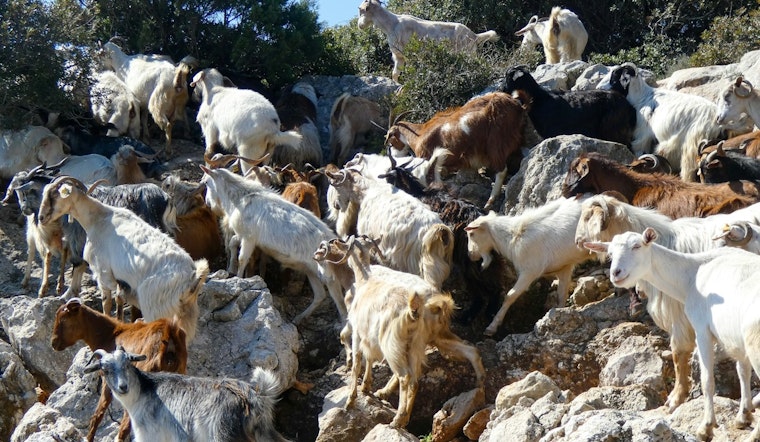
A 500-strong animal crew of 400 goats and 100 sheep has been turned loose on the steep hills above Malibu’s Big Rock neighborhood, chewing through wildfire fuel to carve out defensible space for nearby homes. The herd rolled in on May 21 and is working MRCA-managed parkland between Big Rock Drive and Tuna Canyon, where organizers say the animals are set to thin roughly 70 acres of invasive brush. Officials say the deployment is part of a larger regional push to knock down catastrophic fire risk ahead of the summer season.
Who’s behind the grazing and where the money came from
The Mountains Recreation and Conservation Authority is running the day-to-day grazing operation in coordination with the Los Angeles County and Ventura County fire departments. The Santa Monica Mountains Conservancy awarded $3.2 million in early-action Proposition 4 funds to the two county fire agencies to speed up targeted fuel-reduction work. The money was framed as a jump-start for treating historic fire corridors across the Santa Monica Mountains.
Progress on the ground this month
MRCA’s weekly progress reports show the herd finished grazing plots in Crummer South before being shifted into the Big Rock treatment area during the week of May 18 to 22. The agency’s Week 36 report notes the move into Big Rock occurred on May 21. The Week 37 report records that goats cleared about 15.75 acres in section BR03 during May 25 to 29, with crews continuing in nearby canyons and along roadside fuel breaks, according to MRCA and MRCA. MRCA says it will keep posting weekly updates so residents can follow where the animals and other crews are headed next.
Why officials are using goats
Land managers describe targeted grazing as an ecologically sensitive complement to chainsaws and heavy equipment. Goats and sheep munch through invasive plants and thin out continuous fuel beds in steep, rocky terrain where machinery cannot safely reach. Properly planned grazing can slow fire spread, cut flame intensity and even help soil health and drainage when it is paired with other treatments, according to Fire Safe Marin. Officials stress that grazing is just one tool in a broader wildfire-prevention toolbox, not a standalone fix.
Other tools being used alongside grazing
The grazing operation is backed up by mechanical mastication, prescribed pile burns, fire-road repairs and hand-tool thinning to create and maintain defensible space around communities. A city news release describes the herd working in parkland between Big Rock Drive and Tuna Canyon and directs residents to progress reports and maps for details, according to the City of Malibu. Together, those tactics are intended to break up continuous fuels that let fast-moving, wind-driven fires explode in size.
“We will move quickly and fund the entities who will most effectively protect our communities now,” Santa Monica Mountains Conservancy Chair Steve Veres said in the Conservancy’s grant announcement. Local fire managers and city officials are urging residents to give workers and animals space, secure pets while herds are on site and respect any temporary fencing or signage.
Residents can track maps, acreage totals and schedules as crews rotate through treatment zones by following MRCA’s weekly progress reports and the City of Malibu news flash updates. For ongoing information, check the City of Malibu news page and the MRCA reports referenced above.





