

























































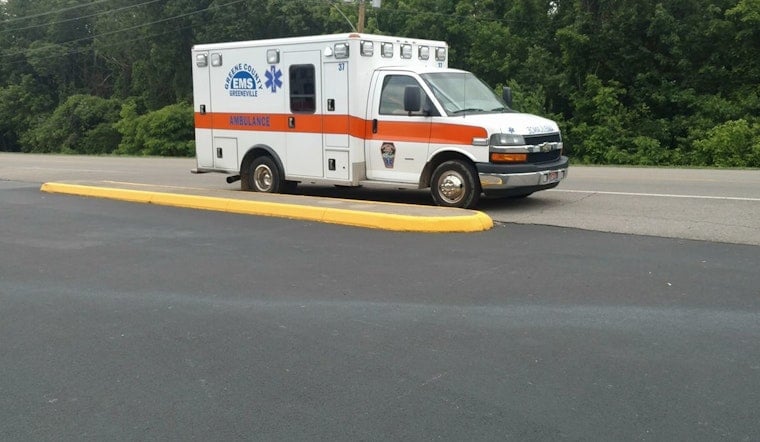
Greeneville-Greene County EMS is trying to bring a hospital staple straight to the ditch on the side of the road: whole blood. The agency has applied for federal Safe Streets for All funding to pilot carrying whole blood and handheld ultrasound to serious crash scenes, county officials say. The idea is simple but ambitious: supervisors would roll to major wrecks with a unit of low-titer O-positive whole blood in the vehicle, while frontline crews would get portable ultrasound devices so medics can spot internal bleeding faster. Local EMS leaders say those tools could cut the time to first transfusion on rural corridors where hospitals sit 30 to 50 miles away. If the money comes through, the agency says it could train crews and launch the program within months.
As reported by WATE 6 On Your Side, Greeneville-Greene County EMS has asked the U.S. Department of Transportation for a $150,000 Safe Streets and Roads for All grant to fund the prehospital whole-blood transfusion pilot. Assistant Director Myron Hughes told the station the proposal centers on boosting post-crash care along busy rural corridors. According to the news report, county leaders turned to federal support after reviewing local trauma trends alongside traffic volumes on key roadways.
What Greene County Is Proposing
Greene County's Action Plan, titled "Real-Time Ultrasound Application in Prehospital Blood Transfusion and Hemodynamic Monitoring," spells out a shopping list that goes well beyond extra bandages. The document calls for purchasing portable ultrasound devices and setting up protocols that allow prehospital whole-blood transfusions, according to a county action plan posted by Greene County Government. Supervisor vehicles would be outfitted with blood coolers, while ALS crews would be trained in blood handling, warming and rapid-infusion procedures.
How The Federal Grant Fits
The U.S. Department of Transportation's SS4A guidance explicitly lists post-crash care and prehospital blood-transfusion demonstration activities as eligible supplemental planning and demonstration work, making Greene County's pitch a textbook example for the program, according to the U.S. Department of Transportation. SS4A planning awards are designed to pay for pilots and evaluations so local agencies can see whether new models of post-crash care actually reduce fatalities and shorten the wait for critical treatment.
Blood Type And National Momentum
The county plans to use low-titer O-positive whole blood for on-scene transfusions. The American Red Cross notes that more than 80% of people have Rh-positive blood and that O-positive units can be used for many emergency recipients, which helps ease immediate compatibility worries when medics do not have a full lab at their disposal. Greene County's move tracks with a broader national shift, as SS4A funding has already underwritten prehospital blood pilots in other regions, allowing agencies to test blood-on-board models, per EMS1.
Local Data Behind The Push
The Action Plan leans hard on some sobering home-county numbers. It cites that 61% of trauma deaths occur before patients ever make it to a hospital, that average rural EMS response times hover near 14 minutes, and that some residents live as far as 50 miles from the nearest Level I trauma center. Those figures are drawn from state registries and mapping tools, according to Greene County Government. Local officials argue those benchmarks outline a dangerous treatment gap where earlier diagnostics and immediate transfusion could make a real difference for critically injured drivers, passengers and pedestrians.
Next Steps And Timeline
County officials told WATE 6 On Your Side that, if the $150,000 grant comes through, Greeneville-Greene County EMS could have the prehospital transfusion program up and running in roughly three months, once training and supply agreements are nailed down. The station reported that the application also sets aside money for training, inventory tracking and public-safety outreach, while EMS crews work with regional hospitals and blood banks to build secure blood-rotation and warming procedures.





