

























































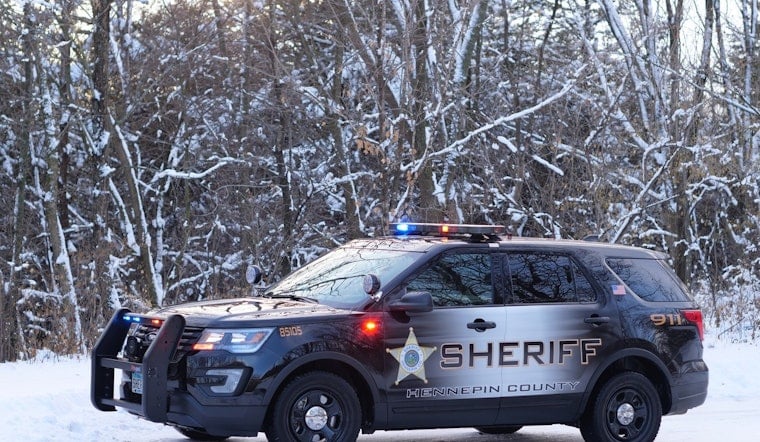
A growing review of Hennepin County law-enforcement practice says deputies are increasingly being tagged as "undercover" to keep body-camera footage away from the public, even when those same deputies are out in full view running traffic stops and street patrols. Defense lawyers and bystanders say the move has kept video of heated arrests out of public records and made it harder to hold deputies to account, raising new questions about how Minnesota's data-access rules are used and who actually decides when an officer is truly undercover.
According to the Minnesota Reformer, two Hennepin County public defenders have tracked roughly 66 cases since April 2025 in which the sheriff’s office invoked undercover status to limit release of body-camera footage. The reporting says the office has applied that label to members of multi-jurisdictional units such as the Violent Offender Task Force, and that in several cases judges have deferred to the sheriff’s designation instead of forcing broader disclosure.
One example highlighted in the reporting involves Allanzo Johnson, who was pulled over in north Minneapolis in March 2025, then tased and arrested. Prosecutors later dropped the charges after reviewing body-camera video. The sheriff’s office, according to the reporting, agreed to share the footage with defense attorneys and prosecutors only on the condition that it would not be copied or released to the public. “I don’t buy that they’re undercover,” public defender Amanda Brodhag told the Reformer, arguing that many of the stops in these cases stemmed from minor equipment violations rather than any covert investigation.
State law and redaction rules
The Minnesota Data Practices Office notes that a 2025 session law clarified how undercover officers must be handled in body-camera recordings. The law requires that undercover officers be redacted in any body-camera videos released to a data subject or the public, and it outlines when footage can become public at all.
State guidance also explains that agencies may, but are not required to, release otherwise private body-camera footage if doing so would "aid law enforcement, promote public safety, or dispel rumor or unrest." The same framework calls for independent biennial audits to check whether agencies are following the rules.
How the sheriff frames it
The Hennepin County Sheriff’s Office points to state statute and its own records-release policies, which allow the withholding of identifying information when disclosure would jeopardize investigations or officer safety. The department's policy manual lists deputies' identities as information that may be withheld if releasing it would "hinder a law enforcement purpose or reveal the identity of an undercover law enforcement officer."
In that reading, labeling more deputies as undercover effectively places more video behind a legal curtain, with the department arguing that it is following the letter of state law while trying to protect sensitive work and the people doing it.
Impact in court and community
Defense attorneys and community advocates counter that the pattern undercuts public oversight, even when video is the clearest evidence of what happened during a disputed stop or use of force. MPR News and other local reporting note that judges have, in some cases, ordered videos turned over to defendants while simultaneously blocking wider public release, leaving bystander footage as the only version of events the public can actually see.
For residents trying to understand high-profile arrests or tense street encounters, that split creates a two-tier reality. Courts and lawyers may see the full picture on video, while the community is left to reconstruct events from whatever phone footage and secondhand descriptions are available.
Legal implications
The push and pull between protecting undercover operations and preserving transparency carries real legal stakes. Defendants are guaranteed discovery in their cases, and the public has a recognized interest in knowing how and when government officers use force.
The Minnesota Data Practices Office guidance spells out both the protections for undercover identities and the narrow circumstances, including certain uses of deadly force, when body-camera footage must be made public to ensure accountability.
Public defenders say they plan to keep challenging broad restrictions on access in court, and civil-rights groups warn that aggressive use of the undercover label could shrink what the public and journalists can see about everyday policing. For now, whether judges or state audits rein in how the sheriff’s office applies that designation will determine how many future incidents ever reach full public scrutiny.





