

























































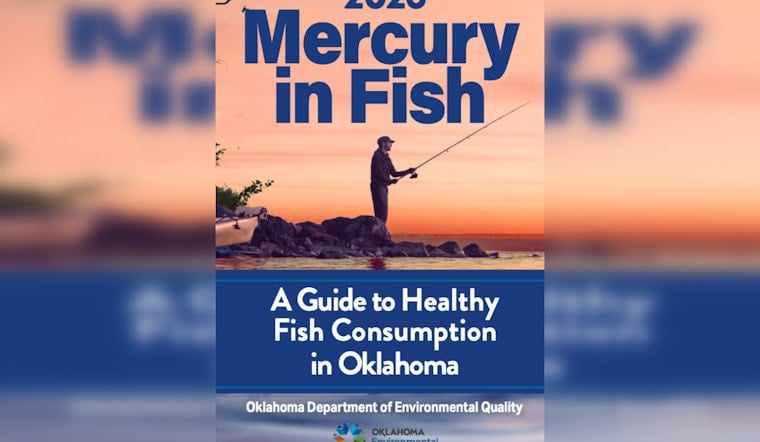
Oklahoma’s environmental regulators have quietly expanded their mercury fish advisories, adding four well loved lakes and telling certain anglers to think twice before frying up the biggest fish in the cooler. The new guidance focuses on size based limits for large predator fish, not on shutting down fishing, and applies to Lake Overholser, Bell Cow Lake, Fuqua Lake and Ponca Lake. Families planning summer fish fries are being urged to double check both species and size before serving their catch, especially to kids and pregnant people.
New advisories at four lakes
Per the Oklahoma Department of Environmental Quality 2026 “Mercury in Fish” guide, sensitive populations should eat no more than two meals per month of the following: at Bell Cow Lake, flathead catfish 46 inches or larger; at Fuqua Lake, largemouth bass 24 inches or larger; at Lake Overholser, hybrid striped bass 29 inches or larger; and at Ponca Lake, flathead catfish 34 inches or larger. The guide defines a meal as eight ounces, or half a pound, of cooked fish and includes lake by lake tables that spell out recommended limits for other species and sizes. Officials say the point is to cut down on harmful mercury exposure while still letting people enjoy fishing.
Who the limits are meant to protect
“Sensitive Population: women of child-bearing age, pregnant or nursing mothers and children up to age 15,” the DEQ booklet states, emphasizing that developing brains are most vulnerable to mercury’s effects. Separate, less restrictive guidance is issued for the general population, typically men and women past child-bearing age. State officials repeatedly stress that these advisories are about making smarter choices at the table, not about closing lakes or keeping people off the water.
Why mercury concentrates in big fish
Mercury can come from both natural sources and human activities, then travel through the air, settle into lakes and gradually build up in the food chain so that large predator fish carry the highest levels, local reporting explains. Jayme Jones, assistant director of the DEQ laboratory suite, told KOSU that “this is just what naturally occurs when you do more sampling,” adding that it is common to see new advisories pop up as testing expands. That expanded sampling is what led to this year’s size specific recommendations at the four lakes.
How anglers can reduce risk
Federal guidance encourages people to choose smaller, non-predatory fish and to mix up their protein sources to keep mercury intake down, and the EPA explains that state advisories are designed to give extra protection to vulnerable groups. Radio Oklahoma News notes, in line with state materials, that fish such as black crappie, channel catfish, rainbow trout and various sunfish usually show lower mercury levels. Checking the advisory for the specific lake you fish, then following the listed size limits, is the simplest way to keep those fish dinners on the safer side; the EPA also offers a plain language primer for readers who want more background.
Where to read the full guidance
The DEQ booklet includes the full lake tables, an outline of testing methods and contact information for follow-up questions. For a concise local summary, see KOSU or coverage from other statewide outlets. Anglers who have specific questions about a particular catch are directed to call their county health department or the DEQ’s laboratory services, with phone numbers listed in the state booklet.





