

























































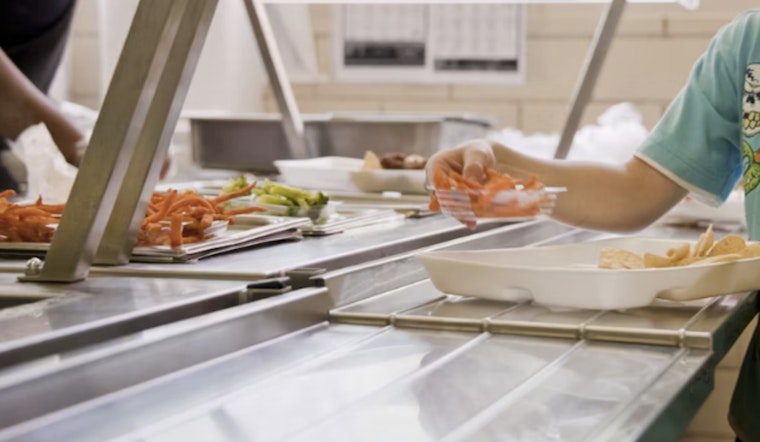
Houston Independent School District will stop using the federal universal free lunch program at 33 campuses in the 2026–27 school year, up sharply from seven campuses this year. District officials say more than 35,000 students will be affected and that families at those schools will have to complete Free and Reduced-Price Meal applications or start paying for lunch. Breakfast, the district notes, will still be served at no cost on every campus.
District Notice and Who Is on the List
In a message to families, HISD put it plainly: “Families who do not qualify will be required to pay for lunch meals.” The district says eligible students at the 33 campuses must complete applications starting July 22.
The list includes some of the district’s most recognizable schools, such as Bellaire, Lamar and Heights high schools, along with River Oaks and West University elementary schools, among others. Those details come from reporting and documents reviewed by the Houston Chronicle.
How the Community Eligibility Provision Works
The federal Community Eligibility Provision, or CEP, decides which campuses can offer universal free meals based on something called the Identified Student Percentage (ISP). That percentage reflects the share of students who are directly certified for free meals through programs such as SNAP, Medicaid or foster-care status.
Federal rules then multiply that ISP by 1.6 to figure out what portion of meals will be reimbursed at the free rate. When a campus has an ISP of about 62.5 percent, multiplying by 1.6 gets to 100 percent, which means the school can cover all meals at the free reimbursement rate. A technical breakdown and an online calculator are available from the USDA Food and Nutrition Service.
Why Participation Has Fallen
School officials and outside observers say the sudden jump in campuses leaving CEP is tied to a drop in students who are automatically “directly certified” for free meals. That is largely because fewer households are enrolled in SNAP and related assistance programs, which shrinks the Identified Student Percentage that CEP relies on.
A Congressional Research Service overview notes that, according to earlier Congressional Budget Office estimates, the nutrition provisions of the 2025 reconciliation law are projected to reduce federal nutrition spending by nearly $187 billion over the next decade. Local reporting has also pointed to a decline in SNAP enrollment in Harris County in the past year. For a deeper dive on the federal side of the equation, see the Congressional Research Service analysis.
What Families at Affected Campuses Should Do
HISD is telling families at the affected campuses that they must submit a Free and Reduced-Price Meal application for the 2026–27 school year. The district directs families to the online portal at schoolcafe.com/HoustonISD and to its Student Eligibility and Accountability office for help completing the forms.
Contact information, application instructions and earlier CEP guidance are laid out in the district’s nutrition-services release. HISD Nutrition Services provides phone and email support for families who need assistance.
Income Thresholds and What “Qualify” Means
Whether a student qualifies still comes down to federal income guidelines. According to the Texas Department of Agriculture’s income chart for the National School Lunch and School Breakfast Programs, a household of four must have annual income at or below $42,900 to qualify for free meals, and up to $61,050 to qualify for reduced-price meals.
Those statewide income charts spell out the cutoffs districts use when families have to submit applications, and they guide how schools determine who gets free versus reduced-price lunches. The full chart is available from the Texas Department of Agriculture (SquareMeals).
What to Watch Next
Parents at the 33 campuses will be watching the application window closely this summer and into the fall. As the new school year gets underway, changes in direct-certification counts could eventually determine whether some schools regain eligibility to rejoin CEP in later cycles.
Families, advocates and campus leaders will be looking for updated numbers and guidance from HISD, state nutrition officials and the USDA as the application process ramps up and the financial impact of losing universal free lunch comes into clearer focus.




