

























































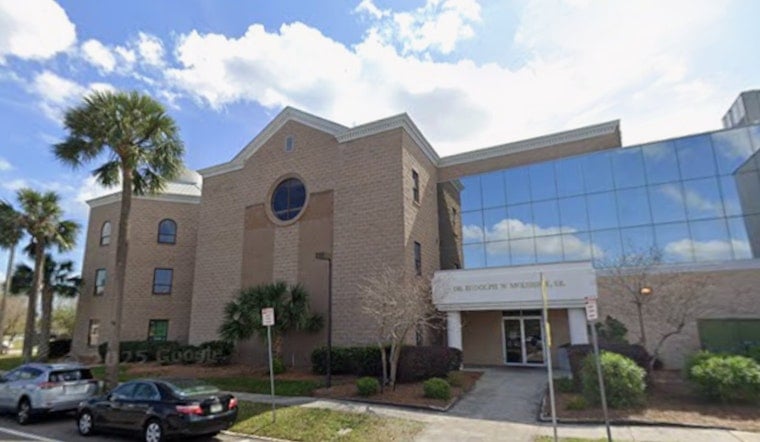
Bishop Rudolph McKissick Jr., senior pastor of The Bethel Church near downtown Jacksonville, and his wife, Pastor Kimberly McKissick, are listed in public records as facing more than $3.1 million in federal tax liens. The most recent filing, recorded in April 2026, shows more than $1.85 million in unpaid individual income taxes tied to tax years 2010 through 2014, while additional notices dating to 2011, 2014, 2018 and 2021 add roughly $1.35 million more. The filings surfaced as the couple’s Jacksonville home has been listed for sale at various points in recent months.
According to Action News Jax, the lien notices were recorded with the Duval County Clerk’s Office and copies were posted online. The station’s review of county records shows separate filings for different tax years and notes that the earlier liens do not appear to have been released or reduced. Reporters also say they contacted the McKissicks and Bethel Church for comment but had not received a response before publication.
What the filings show
The April notice, one of several recorded in county files, lists more than $1,850,000 in unpaid income taxes assessed for 2010 through 2014. Earlier notices reviewed by reporters add roughly $1.35 million to that total. A copy of the April lien is posted on Scribd, and, as Action News Jax reports, experts warn that those balances can climb even higher once penalties and interest are factored in. “In many cases, you’re looking at taxes, penalties and interest accumulating over time,” Michael Jorgenson, a former IRS tax attorney, told the station.
How federal tax liens work
A Notice of Federal Tax Lien is a public claim the IRS records to alert creditors that the government asserts an interest in a taxpayer’s property. The filing can cloud title and make refinancing or sales difficult, but it does not by itself seize assets. The IRS lays out the criteria for filing and the options taxpayers can pursue to address liabilities, including installment agreements and offers in compromise, and warns that collection powers can escalate if debts go unresolved.
Why church assets may be safe for now
Tax rules generally treat a pastor’s personal tax obligations as separate from a congregation’s finances. The IRS typically must show commingling or misuse before it will attach a church’s property for a pastor’s personal debts. Legal analysts say piercing that separation usually requires clear evidence and high-level IRS scrutiny. Bethel Church’s own website notes that the congregation traces its roots to 1838 and operates from 215 Bethel Baptist Street, according to The Bethel Church. For background on how churches and tax enforcement intersect, see Church Law & Tax.
Legal implications
If the liabilities remain unresolved, the IRS has a range of collection tools available, from levies on bank accounts to wage garnishment and, in some cases, seizure of property. Those steps typically come only after notices and opportunities to resolve the debt. The agency’s collection statute generally runs 10 years from the date of assessment, subject to suspensions or extensions in certain cases, so timing and negotiation can be critical. Details are outlined by the IRS.
This story will be updated if Bethel Church or the McKissicks issue a public statement or if county records show releases or other changes to the filings. In the meantime, tax professionals recommend that anyone who sees similar notices confirm the documents with the county clerk’s office and consult a qualified tax adviser.





