

























































Cincinnati has spent decades as a national Montessori powerhouse, but that status is looking a little less automatic these days. With a signature university training program in flux and a sprawling network of public and private schools to staff, the city is now wrestling with a basic question: who will teach the next generation of Montessori students, and where will they learn?
The scale of what is at stake is not small. Cincinnati has 13 public Montessori schools and roughly 30 private Montessori programs, enrolling an estimated 8,000 students, according to Cincinnati Magazine. When that many classrooms depend on specific training pathways, accreditation, and lab-school models, even a single institutional shift can ripple through neighborhoods and early-childhood pipelines.
Public network still strong, but shifting
Cincinnati Public Schools runs one of the country’s most extensive public Montessori networks, stretching from neighborhood elementary magnets to two Montessori high schools. Cincinnati Public Schools and the district’s Bramble Nature Campus describe Bramble as an AMS-accredited lab site that supports teacher training and continuity across grades. That infrastructure gives families a tuition-free Montessori option at a time when demand for credentialed guides and adolescent Montessori seats is growing.
Xavier’s pivot changed the landscape
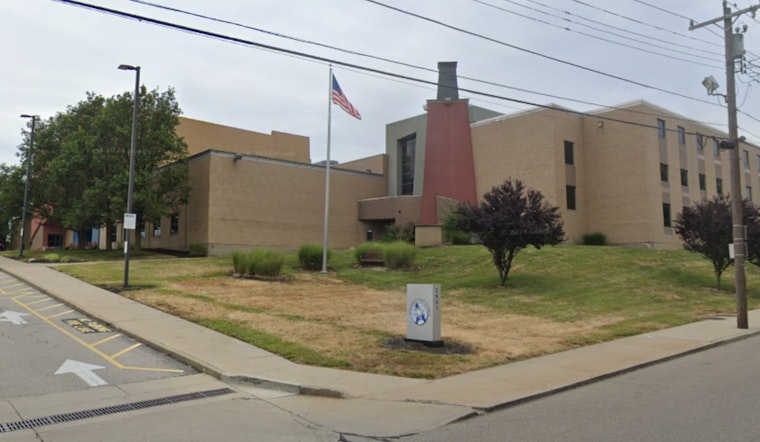
Xavier University helped put Cincinnati on the Montessori map, with teacher-education work dating back to the 1960s that has fed classrooms across the region, Xavier University notes. The university’s recent decision to move away from the traditional Montessori lab-school model and reimagine XUMLS prompted sharp pushback from families and staff, as reported by WCPO. University filings also show program restructurings in 2021 that eliminated or repurposed several Montessori-adjacent credentials, a shift that narrowed one local training pathway.
District aims to build its own pipeline
To shore up supply, the district has moved to bring AMS accreditation training in-house. Cincinnati Magazine reports Cincinnati Public Schools says the change will save the district “hundreds of thousands” in credentialing fees, according to district spokesperson Joe Wessels. District leaders argue that an internal pathway could stabilize staffing and reduce reliance on external credentialing if CPS can scale rigorous coursework and supervised practica to match its ambitions.
What’s next for Montessori in Cincinnati
The city’s Montessori future will hinge on whether universities, the district, and independent schools can coordinate recruitment, training, and placements while protecting high-fidelity practice. The American Montessori Society’s school directory shows a dense regional network of private and independent programs, and sector observers say lab-school disruptions and private-school churn are already reshaping where teachers train and where families enroll. American Montessori Society resources and analysis from Montessori Public underline both the opportunity and the risk if Cincinnati’s many Montessori pieces do not move in concert.





