

























































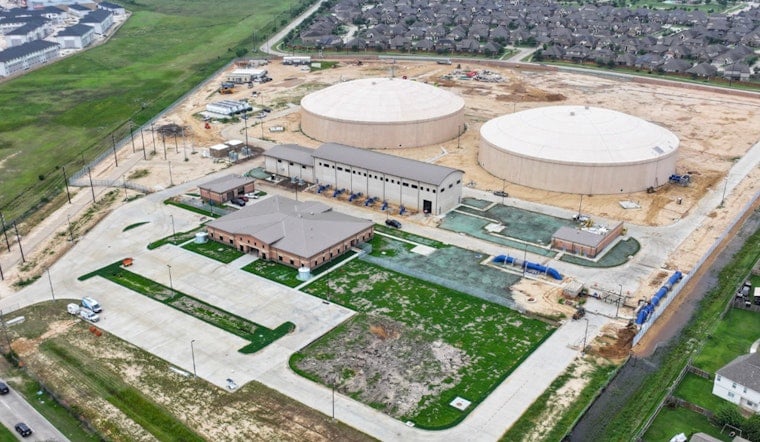
West Harris County’s long-planned water shake-up is no longer just a stack of engineering diagrams and construction photos. In early June, the West Harris County Regional Water Authority quietly hit the start button on its new Central Pump Station in Katy, sending treated Lake Houston water into the authority’s distribution lines for the first time.
In a June 2 press release via WHCRWA, the authority reported that the Central Pump Station at 4655 Fry Road opened its valve at about 11:15 a.m. and began pumping treated surface water from the City of Houston’s Northeast Water Purification Plant into WHCRWA’s internal distribution system. From there, the water moves on to municipal utility district water plants, where it will be blended and then delivered to homes, schools, and businesses.
Where the water comes from
Lake Houston is fed by inflows from the Upper San Jacinto River Basin, along with additional raw water brought in through the Luce Bayou Interbasin Transfer Project, according to Wastewater Digest. That raw water is treated at the Northeast Water Purification Plant before entering the Surface Water Supply Project, which delivers it to regional systems like WHCRWA’s.
Regulatory backdrop
This isn’t just a “nice-to-have” infrastructure upgrade. Regulatory pressure from the Harris-Galveston Subsidence District is the main force behind the move away from groundwater, as the District points to subsidence risks tied to heavy pumping from local aquifers. Its regulatory plan set phased conversion targets of 30% by 2010, 60% by 2025, and 80% by 2035, according to the Harris-Galveston Subsidence District.
What WHCRWA says
WHCRWA describes the Central Pump Station as a major piece of its broader Surface Water Supply Project and has cast the June startup as the product of decades of planning, engineering, and investment. Eric Hansen, WHCRWA president, said in the authority’s release, “Switching to surface water is essential in the Houston region because of subsidence, the gradual sinking of the ground as aquifers are depleted.” The authority’s website also estimates it will deliver roughly 52.8 million gallons per day of surface water in 2026 as part of that ongoing conversion effort, according to WHCRWA.
Local coverage and next steps
The milestone didn’t stay under the radar for long. Local media picked it up later in June, and the Katy Times ran a June 17 piece that republished WHCRWA’s release along with photos of the station. For now, residents and water-district officials should expect the most noticeable changes to happen at the water-plant level, while any impacts on rates and day-to-day operations will hinge on how quickly individual municipal systems connect to the surface-water network.
For most customers, the shift will be all but invisible at the tap in the short term. Behind the scenes, though, it marks a major infrastructure turn intended to protect the long-term reliability of the region’s water supply. Officials say this is just one milestone on the Surface Water Supply Project’s schedule, with more segments still to come online. WHCRWA and local MUDs are expected to roll out additional updates as those pieces are completed.




