

























































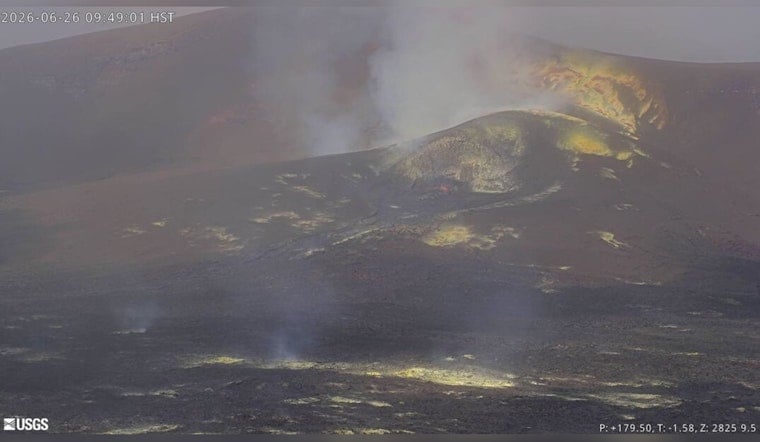
Kīlauea is acting up again on the Big Island, and scientists say the timing is getting uncomfortably specific. Renewed vent glow, periodic spattering and steady summit inflation all point to another short, intense fountaining episode that could kick off within days, most likely Friday into Saturday. If it does, ash, Pele's hair and other lightweight volcanic debris could drift downwind, and people near Hawaiʻi Volcanoes National Park should be ready for quick park closures and brief hits to air quality and rainwater catchment systems.
HVO narrows the forecast window
According to the U.S. Geological Survey's Hawaiian Volcano Observatory, the summit eruption in Halemaʻumaʻu is currently paused, but observers are seeing "strong vent glow, cyclic tremor and intermittent spattering," including bursts from the south vent. That pattern tells scientists magma is still close to the surface and that another episode is likely.
HVO's modeling pegs the most probable onset between June 25 and June 27, with June 26 highlighted as the most likely day for what many are calling "Episode 50" to kick off.
What forecasters say communities could see
The National Weather Service in Honolulu warns that, once fountaining starts, varying amounts of ash, glassy volcanic fragments, Pele's hair and other lightweight tephra could fall downwind of the summit. Forecasters say low-level winds would most likely push material to the west, while a stronger eruption could loft debris above the trade-wind inversion and send it north.
Typical fountaining episodes last less than 12 hours, according to the NWS, but ash and fine particles can hang in the air longer depending on winds and weather. Downwind communities are being urged to limit outdoor exposure if any fallout occurs.
Park operations and official lines
Hawaiʻi Volcanoes National Park routinely tightens access around the summit during eruptive activity and reminds visitors that overlooks and roads can close with very little warning. The park's June updates list current visitor notices and how to sign up for alerts.
Local outlets, including Maui Now, are tracking the latest HVO forecasts as the situation evolves. Park managers and county emergency officials are coordinating with HVO on hazards and public access, according to the U.S. Geological Survey's Hawaiian Volcano Observatory.
How to prepare and where to get updates
Residents who live downwind of the summit should be ready to close windows, bring outdoor animals under cover and have N95 masks or similar protection on hand in case of ashfall. The Hawaii Interagency Vog Dashboard offers air-quality maps and health guidance specific to volcanic emissions.
Anyone who observes tephra fall is encouraged to share photos and basic details through the community ash reporting form at hawaiiash.science, and to follow local emergency channels for any last-minute park or road closures as Kīlauea's next move comes into focus.



