

























































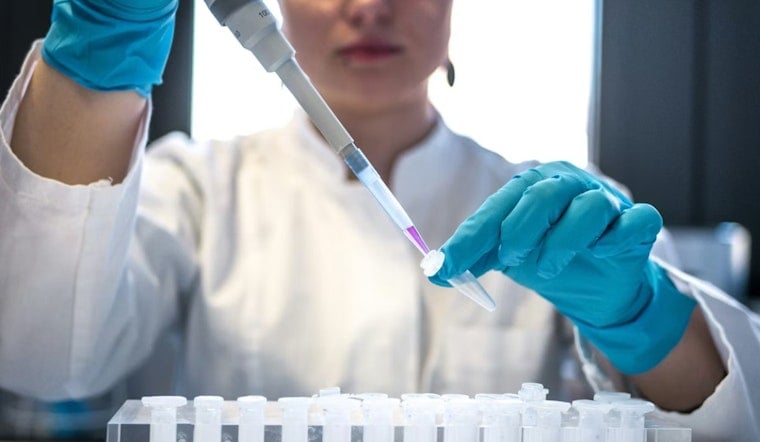
La Jolla scientists are helping build what could be a new playbook for vaccine design, teaming with researchers in Israel on a computational system that hunts for tiny protein fragments most likely to fire up T-cell responses across many different genetic backgrounds. The approach, called superHLA, leans on machine learning to sift through hundreds of thousands of peptide candidates, narrow them to a manageable panel, and send the finalists to the lab. Early tests turned up two dozen peptides that can latch onto multiple HLA groups, a result that, if it holds up, could change how scientists pick vaccine targets in the first place.
How SuperHLA Finds Its Superbinders
In a study in PNAS, the team describes superHLA as a probabilistic, machine-learning pipeline that mixes Markov chain Monte Carlo optimization with established MHC-binding predictors to design synthetic peptides nine amino acids long. The model screened more than 190,000 candidates, then used clustering and feasibility filters to winnow the set down to 100 peptides for chemical synthesis. Biochemical assays at the La Jolla Institute confirmed 24 of them as "superbinders": 21 bound at least four HLA supertypes, and one managed to bind nine of the 12 tested. The work was led by Tomer Hertz of Ben-Gurion University, with graduate students Elinor Peer and Liel Cohen-Lavi credited for much of the computational heavy lifting.
Lab Results And Local Reaction
Researchers at the La Jolla Institute for Immunology handled the lab side of the project, running the binding assays and helping make sense of the biochemical data, and the results have gotten local scientists talking. "This is fantastic and exciting work," Alessandro Sette of the La Jolla Institute told the Times of San Diego. Hertz, who traces the concept back to a discussion with a colleague at Fred Hutchinson Cancer Center, said the project emerged from a 15-year conversation, adding that good ideas are worth continuing to dig into as the group turned a whiteboard sketch into a publishable study.
Why The Result Could Reshape Vaccine Searches
HLA genes are famously diverse, with more than 22,000 known variants cited in the paper and local coverage, so peptides that can be presented by many different HLA molecules might help vaccines reach people with very different genetic makeups. The authors write that superHLA could be applied to infectious disease vaccine design, cancer neoantigen discovery, and pandemic preparedness, and that it may improve immune coverage in populations that have historically been underrepresented in immunology data, according to PNAS. They also stress the fine print: strong biochemical binding is no guarantee of a protective T-cell response, and more functional testing and validation will be needed.
The La Jolla Institute for Immunology's role underscores San Diego's standing in computational and vaccine research, while providing superHLA with a clear path from in silico hits to real-world lab validation. Researchers say the next steps include checking whether the superbinders trigger the right T-cell responses across diverse donors and then moving into animal models, long before anyone talks about clinical trials.





