

























































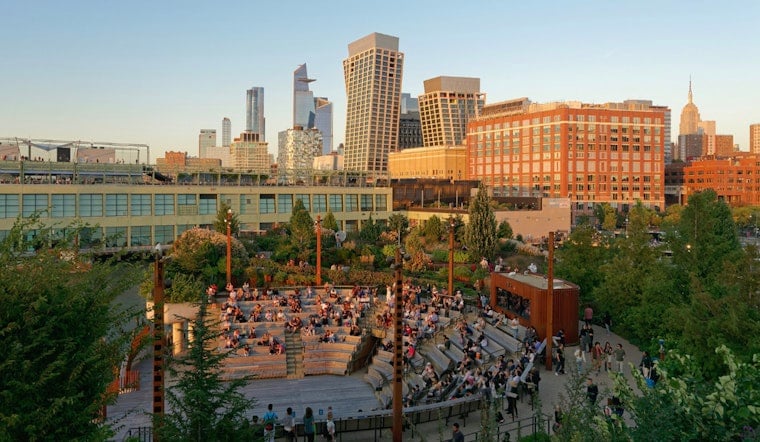
Little Island, the floating park off Manhattan’s Meatpacking District, is shrinking its summer arts calendar, trimming the season to an abridged six-week run from July 29 through Sept. 6 with about 56 scheduled performances. That is roughly half the number of shows the park presented last summer, when organizers listed about 110 events. Park leaders say the tighter window is meant to concentrate short runs and create denser, higher-impact programs instead of stretching activity across a longer rolling season.
What Is Changing This Summer
This year’s lineup leans on stacked short runs and walk-up Glade events, with Amph performances generally ticketed at $25 and many Glade programs remaining free. Listings compiled by TDF show headliners including Justin Vivian Bond, Anthony Roth Costanzo and Cécile McLorin Salvant, along with a new play titled Marina by Julio Torres and Martine Gutierrez. The compact schedule runs mostly in the evenings and packs multiple short engagements into each week.
How Leadership Is Framing The Shift
“While it’s shorter, it is dense and no less ambitious and no less high-quality,” Zack Winokur, Little Island’s producing artistic director, told The New York Times. The paper also reported that Barry Diller, who provides the bulk of the park’s funding, has pushed for programming to move in a different direction, a shift organizers say helped shape this year’s compressed calendar.
What Artists And Audiences Lose And Keep
Little Island has leaned into new commissions and premieres in recent seasons, so a shorter timetable raises questions about how many new works will be staged going forward. Coverage of last year’s lineup noted the park presented roughly 110 events in 2025, and critics and artists say the new approach could concentrate audiences while reducing opportunities for developmental runs. Whether the pivot ultimately benefits ticket buyers or narrows access for emerging artists is still an open question.
How To Grab A Spot
Many Amph performances are sold through third-party ticketing platforms, while Glade events stay free and first-come, first-served. For the full calendar and to purchase tickets, audiences can check listings on TodayTix or consult local arts calendars that carry the season. Organizers argue the concentrated model will deliver higher-impact nights; audiences and artists will decide whether the trade-offs feel worth it once the shorter season gets underway.


