

























































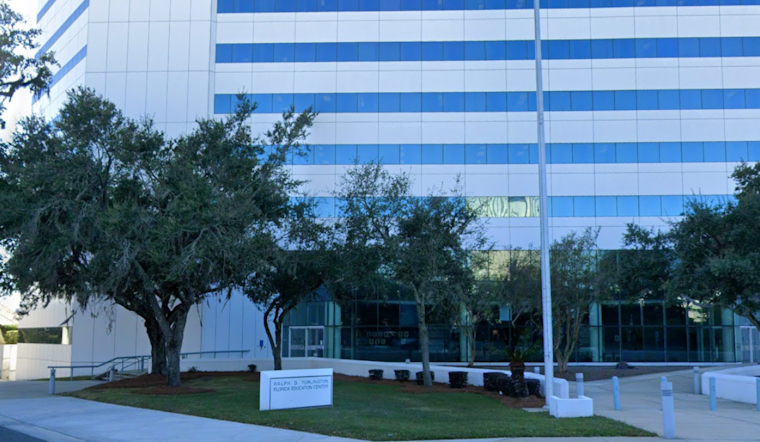
State regulators have given Riggs College of Allied Health in Longwood a cautious green light to keep enrolling new nursing students this month, even as the program sits on a probationary license and struggles with weak licensure exam results. The state panel put a lid on how many newcomers the school can take but stopped short of shutting the doors, instead opting for tighter oversight.
Program on probation, weak NCLEX results
Riggs' associate degree nursing program appears as on probation and "Not Accredited" on the Florida Department of Health's prelicensure program list, which shows a 2025 cumulative first time NCLEX-RN pass rate below 70%. According to the Florida Department of Health, the small cohort has had quarters where only one of six graduates passed the exam and typically sends no more than about two dozen first time test takers in a given year.
Commission imposes a 40-student cap
During a May 28 meeting, the state Commission for Independent Education voted to let Riggs continue enrolling while capping new admissions at 40 students per year, a compromise that drew visible frustration from several board members. As reported by the Orlando Sentinel, Commissioner John Euliano warned that "it looks like it's getting worse," and other commissioners pressed for stronger accountability tied to the school's outcomes.
Owner's past raises questions
School president Oladimeji Adekunle told the commission, "we are not giving up. we stand tall," as he argued for the program's future. His record, however, includes a 2011 Pennsylvania consumer protection action involving a previous training business. Contemporary local coverage describes a suit against America Health Care Inc. and Adekunle seeking student refunds and operational limits for allegedly offering unapproved practical nursing classes, according to GantNews.
Cost and financial aid limits
Riggs lists tuition for its Associate of Science in Nursing program at $439 per credit, which comes to about $21,950 for core credits and roughly $28,930 in total program costs. The college also states that it does not participate in federal student aid. On its tuition and fees page, Riggs points students to private financing options and explicitly notes that federal grants and subsidized loans are not available. Full cost details are posted by Riggs College.
Statewide context: oversight and outcomes
Critics tie situations like Riggs' to a 2009 loosening of Florida rules that made it easier for private, for profit nursing programs to launch, a shift that has left policymakers arguing over how to protect would be nurses from weak programs. The issue has resurfaced repeatedly as Florida's overall NCLEX pass rates trail national averages and proposed reform bills stall in Tallahassee. Governing has collected reporting and analysis on those policy fights, placing Riggs within a broader pattern of uneven performance across the state.
Accreditation review could be pivotal
Riggs says it is pursuing program accreditation, and the Accreditation Commission for Education in Nursing has the college listed for an on site review in October 2026. That outside evaluation, along with continued monitoring by the Commission for Independent Education, will serve as key tests of whether regulators believe the school can turn around its student outcomes. The upcoming visit schedule is posted by ACEN, and the state maintains a public record for Riggs through the Florida Commission for Independent Education.
Legal and consumer implications
Because Riggs is not accredited and does not participate in federal aid programs, its students risk paying tens of thousands of dollars out of pocket for a credential that could be harder to use if accreditation efforts stall or licensure results stay weak. Past consumer protection actions against operators that marketed unapproved training programs highlight the financial and licensing hazards for students who enroll at underperforming schools, as reflected in information from Riggs College and in 2011 coverage by GantNews.
For now, the Longwood program stays open under the 40 student admissions cap and state oversight. In the months ahead, regulators and the scheduled accreditation team will be watching closely to see whether exam scores and classroom practices improve enough to justify keeping the doors open.





