

























































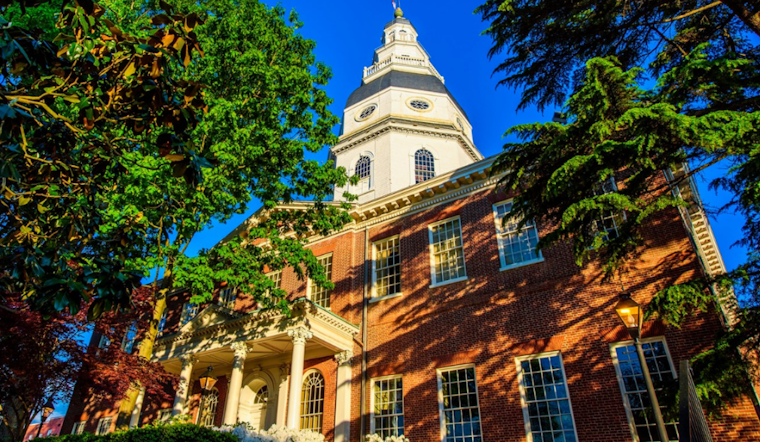
In Maryland, skipping the four-year campus lifestyle is not exactly a financial death sentence. A new state-by-state ranking of earnings shows that adults 25 and older with some college or an associate degree take home a median of roughly $55,301 a year, putting the state at the top of the heap for non-degree workers.
The raw numbers come from the U.S. Census Bureau's 2024 American Community Survey subject tables, which report median earnings by educational attainment for people 25 and older, according to the Census Bureau (Table S2001). Analysts use that table to line up states' medians and see where workers without a bachelor's degree are doing relatively well.
Business Insider took those ACS medians and built a state ranking that put Maryland in first place, followed by Alaska and Washington, with Arkansas at the bottom. The analysis notes that adults with a bachelor's degree earn about 38.6% more than those with some college or an associate degree, a difference of roughly $18,539, and that the ranking does not adjust for cost-of-living gaps across states. As reported by Business Insider, the list focuses on median earnings for adults 25 and older with some college or an associate degree.
Why Some States Rank Higher
State medians reflect local job mixes, industry pay scales, and big-city costs more than the raw value of a credential on its own. Occupations that often pay well without a four-year diploma, such as unionized construction trades, certain energy and extraction jobs, and some technical health care roles, help push non-degree earnings higher in particular states. Earnings tables from the U.S. Bureau of Labor Statistics show clear pay gaps by educational level that vary by occupation and region, which helps explain why some states outperform others for non-degree workers; see the Bureau of Labor Statistics data.
Alternatives to a Four-Year Degree
Registered apprenticeships, certificates, and community-college programs can lift earnings without the price tag of a four-year university, and evidence suggests apprentices see sizable short-term pay bumps. The U.S. Department of Labor has compiled multiple evaluations showing that apprentices often increase their earnings after completing training, and many states are expanding apprenticeship and credential programs to keep up with employer demand; see U.S. Department of Labor research. For workers who can plug into high-paying non-degree fields, that can mean clearer, lower-cost paths into stable careers.
What This Means Locally
In Maryland, the regional mix of federal contracting, health care, and skilled trades helps support higher wages for workers with some college but no bachelor's degree. Taken together, the numbers suggest there are viable routes to middle-class incomes that do not run through a four-year campus. State research and regional Federal Reserve data put Maryland's median earnings for some-college workers at about $55,301, underscoring how local labor markets and policy choices shape outcomes, according to a Richmond Fed analysis.





