

























































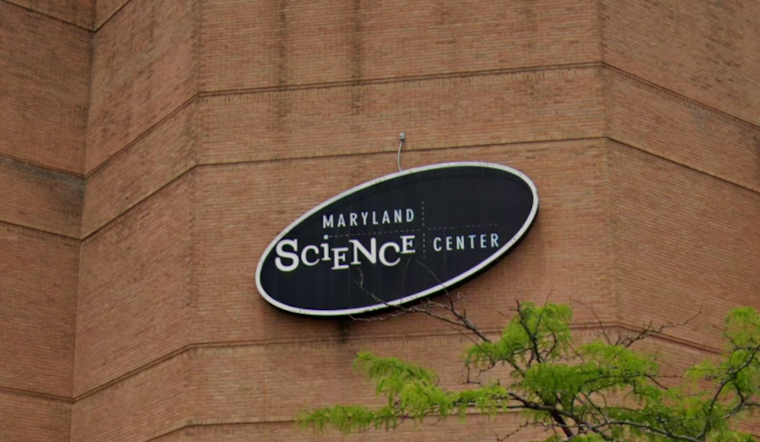
The Maryland Science Center hit the big 5-0 over the weekend and used the milestone to tee up its next act: a full rethink of the Harbor Plaza that fronts its Inner Harbor entrance.
On Saturday, the museum hosted a ceremonial groundbreaking for the reworked plaza that will reshape how visitors arrive from the waterfront promenade. Gov. Wes Moore and Senate President Bill Ferguson turned up for the event, which also doubled as the public finale of the Science Center’s anniversary capital campaign. Actual construction is scheduled to wait until after the summer season, so the museum’s highly trafficked front steps do not turn into a construction zone when tourists and school groups are swarming the harbor.
What Is Changing at the Harbor Plaza
The overhaul calls for trading in the old brick steps and tiered terraces for a gently sloping walkway, a lawn planted with native species, and a shade canopy, along with new water-management systems designed to cut runoff into the Chesapeake Bay, according to WCBM. Kenneth Snelson’s 1978 metal sculpture “Easy Landing” will remain where it has hovered for decades, but the new layout will frame it with grass and fresh plantings rather than hardscape.
Mahan Rykiel Associates is leading the plaza design, which museum leaders say should feel like a more casual, kid-friendly front door for school buses and families rolling strollers in from the promenade.
Money and Timing
During the ceremony, the Science Center announced it had wrapped up a $15.2 million fundraising campaign, with the Harbor Plaza work among the projects getting a slice of that funding. The plaza is also supported in part by state capital grants, according to Board of Public Works agenda documents, which list a series of recent capital allocations totaling multi-million-dollar backing for infrastructure and plaza improvements at the site.
Museum officials say the shovels will not actually hit the ground until fall 2026, a timeline meant to keep major construction away from the high-traffic summer months when the Inner Harbor is thick with field trips and out-of-town visitors.
Visitor Perks and Programming
To celebrate the 50-year mark, the Science Center briefly turned back the clock on admission prices. For the anniversary weekend, kids got in for $1, adults for $2.50, and seniors for $1.50, matching its 1976 pricing, alongside live science demonstrations and special hands-on activities, according to details in the Science Center’s spring newsletter.
The anniversary spotlight also landed on access initiatives that are meant to outlast the party. The museum has been promoting reduced-price admission for Maryland SNAP and WIC cardholders and an extension of free field trips for Maryland schools through 2030, according to the Maryland Science Center. Those efforts sit alongside recent exhibit refreshes and outreach projects funded through the broader capital campaign.
A Small Footprint With Big Visibility
On paper, the Harbor Plaza redo is a relatively compact project. In real life, it is parked on one of the Inner Harbor’s most high-profile corners. The Science Center has anchored that stretch of waterfront since 1976, long before many of the harbor’s newer attractions arrived, so even subtle design changes are likely to be noticed by tourists, joggers, and local families cutting through on weekends.
The emphasis on native plants, reclaimed paving, and modern stormwater controls mirrors a larger shift among waterfront institutions toward greener, less flood-prone public spaces, as Baltimore Fishbowl has reported. Science Center leaders describe the plaza as the final piece of their 50th anniversary campaign and say it will help them push more of their programs outside when the weather cooperates.
The reimagined plaza is designed to juggle environmental goals with everyday use, creating a softer slope for visitors arriving from the promenade and carving out a modest outdoor classroom space for demonstrations and exhibits. With construction targeted for fall 2026 and a new entrance that leans into shade, greenery, and better stormwater control, organizers told WCBM they hope the project will read as a low-key but unmistakable upgrade to the Inner Harbor streetscape.





