

























































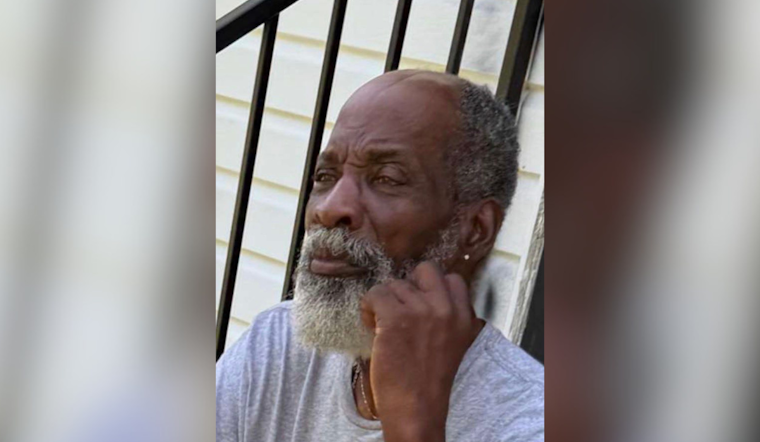
A 69-year-old Northeast Baltimore man who vanished nearly two weeks ago has been found safe. Baltimore Police confirmed Wednesday that Lee Townes, last seen on August 7 in the 4200 block of Hamilton Avenue, has been located safe and unharmed.
Police first issued a public missing person advisory for Townes on August 8, a day after he was last seen, according to Baltimore Police. Townes had been classified as a missing vulnerable adult, standing 6 feet 2 inches tall and weighing 160 pounds. He was last seen wearing a white t-shirt, blue jeans, a black ball cap with yellow lettering, and black boots. In its update, Baltimore Police thanked the public for sharing the original post and credited the outreach with helping generate the leads that led to his safe recovery.
Missing Vulnerable Adult: Help police locate missing 69-Year-Old Lee Townes (6’2; 160lbs).
— Baltimore Police (@BaltimorePolice) August 8, 2026
He was last seen on August 7, 2026, in the 4200 block of Hamilton Ave. wearing a white T-shirt, blue jeans, black ball cap with yellow letters & black boots.
Anyone with information… pic.twitter.com/zuRPz1JG10
Where He Disappeared From
The 4200 block of Hamilton Avenue sits in Northeast Baltimore, close to the Frankford and Lauraville neighborhoods, near major corridors like Belair Road and green space including Herring Run Park, according to property records reviewed by Redfin. The area's mix of transit routes and nearby parkland is the kind of terrain that can complicate search efforts for a missing senior on foot.
Townes' case was classified as a missing vulnerable adult, a designation that carries specific weight under Baltimore Police Department protocol. Policy 714 requires officers to immediately classify missing individuals with diminished mental capacity or severe medical conditions under that label, eliminating any mandatory waiting period before search operations begin, Hoodline has reported.
How Maryland's Alert System Works
Maryland also maintains a statewide Silver Alert Program, created under Public Safety Code § 3-604, which lets law enforcement agencies rapidly broadcast missing person details across highway message boards, media outlets, and police networks when a missing adult has a cognitive impairment, according to Justia Law. Notably, those alerts can only be formally requested and activated by law enforcement through the Maryland State Police — not directly by a missing person's family or caregivers, per the Maryland Center for Missing and Unidentified Persons. It is not clear from available information whether a Silver Alert was formally activated in Townes' case.
Baltimore's demographics help explain why cases like this recur. About 12.9% of Maryland residents 65 and older live with Alzheimer's disease, but Baltimore City's rate climbs to 16.6% — among the highest of any U.S. county or major city, according to 2024 Alzheimer's Association data cited by Simpson Law, PA. Clinical research published in the Journal of the American Academy of Psychiatry and the Law has found that more than 60% of people with dementia or cognitive impairments will wander from their residences at least once.
A Pattern of Local Recoveries
Townes' case follows a similar outcome just days earlier. Baltimore Police reported finding 75-year-old Donald Humphries safe and unharmed on August 16 after he had gone missing as a vulnerable adult in South Baltimore, Hoodline previously reported in its coverage of the Hanover Street search. Nationally, the scale of these cases is significant: the FBI's National Crime Information Center logged 192,699 missing adult reports for people 18 and older in 2025, according to CaseTrace.
Maryland also runs a statewide Senior Call-Check program, a state-legislated service offering daily automated welfare calls to residents 65 and older who opt in, according to state Sen. Ben Kramer's office. It remains one of the state's proactive tools aimed at catching problems before a senior goes missing altogether.
Baltimore Police did not release details on where or how Townes was found, consistent with the department's typical practice of withholding privacy-protected specifics in missing vulnerable adult cases. Anyone with information related to missing persons cases can contact the Baltimore Police Missing Persons Unit at 410-361-9929 or call 911.



