

























































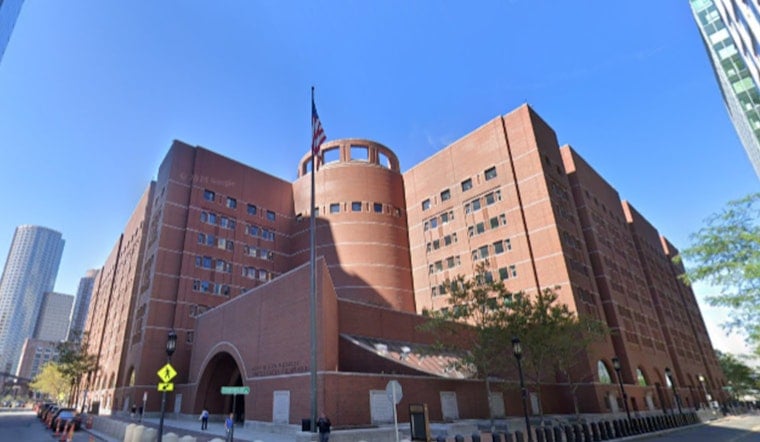
Massachusetts is leading a five-state New England charge into federal court, trying to stop a new Medicaid work rule that state officials say will knock tens of thousands of residents off MassHealth. In a lawsuit filed Monday, the states argue that federal regulators quietly changed the rules of the game, tightening who counts as “medically frail” and layering on verification hoops that neither states nor beneficiaries are ready to clear. The coalition is asking a Boston federal judge to put key parts of the rule on ice while the legal fight plays out, warning of administrative chaos and broad coverage losses if it moves forward on schedule.
What the lawsuit says
The complaint, filed in U.S. District Court for the District of Massachusetts, argues that a June 3 interim final rule “dramatically narrowed” statutory protections for people deemed medically frail and saddled beneficiaries with heavy proof requirements. The states say the rule is arbitrary and capricious, violates the Administrative Procedure Act, and unlawfully boxes in how they can carry out the 2025 federal law. The full filing is available from the California Attorney General's Office.
How the rule would work
Under the new guidance, most Medicaid enrollees between ages 19 and 64 must document at least 80 hours a month of work, school, or community service to enroll in or keep coverage, a structure that federal officials say carries out Public Law 119-21. According to the Centers for Medicare & Medicaid Services, the rule spells out the verification and reporting standards that states must follow.
State officials counter that the agency’s new requirement for medically frail enrollees to prove that their condition actually prevented them from meeting the 80-hour mark is a sharp departure from earlier signals and could significantly shrink who qualifies for an exemption, as reported by The Boston Globe.
State officials push back
Massachusetts Attorney General Andrea Joy Campbell did not mince words in a statement Monday, calling the effort “The Trump Administration’s attempt to impose new, burdensome requirements on Medicaid recipients [that] threatens access to healthcare for our most vulnerable residents and families,” as reported by The Boston Globe. State leaders say the rule contradicts months of preliminary guidance and leaves little runway to reprogram eligibility systems, update notices, and mount an outreach campaign.
One estimate cited by The Boston Globe suggests that more than 200,000 MassHealth members could lose coverage under a strict, on-time rollout of the rule, a prospect that has state officials and advocates bracing for a wave of disruption.
Experts warn of paperwork and coverage churn
Policy analysts have been sounding alarms about what they call “procedural terminations,” where people get dropped from Medicaid not because they are ineligible, but because they miss paperwork, cannot navigate new reporting tools, or fail to understand the rules in time. Early state experiments with work requirements showed how quickly that kind of coverage loss can snowball.
The Center for Health Care Strategies, which tracks Medicaid implementation choices, notes that defining and then proving medical frailty is likely to be a messy, time-consuming process for both agencies and enrollees. The Associated Press has also pointed to earlier episodes, including in Arkansas, where similar reporting rules were followed by rapid disenrollments before courts stepped in.
Legal stakes and timeline
The plaintiffs are asking the court for immediate relief, arguing they cannot simply wait for the federal agency to revisit the rule through a full notice and comment process. Both the complaint and state press materials highlight an August 31 deadline for states to notify Medicaid members about the new work requirements, with the policy scheduled to take effect January 1, 2027.
The lawsuit is being led by a coalition of state attorneys general and governors. The California Attorney General's Office has published a press release laying out the group’s arguments and legal theory. How quickly the court sets a briefing and hearing schedule will determine whether implementation is paused or moves ahead while the case is argued.
For MassHealth members, that leaves a period of uncertainty. State agencies, safety net providers, and advocacy groups are trying to plan for multiple scenarios at once, from rushed outreach and appeals to a last-minute court freeze. The judge’s decision on whether the narrower federal interpretation stands or is put on hold will determine how much protection medically frail residents and other vulnerable enrollees actually have when the work rule clock runs out.





