

























































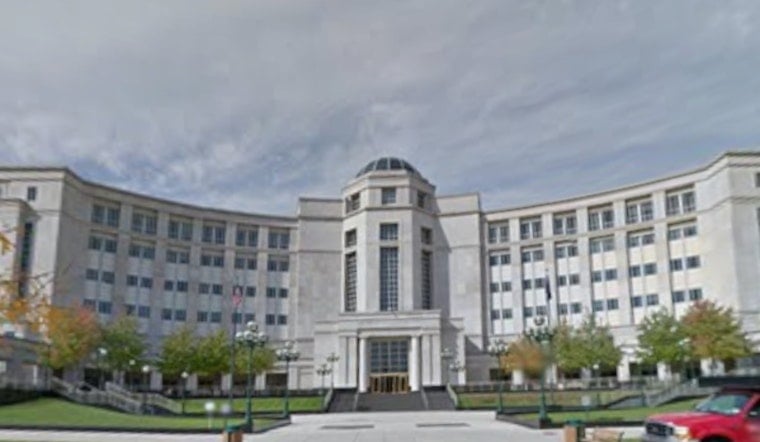
Michigan’s highest court has stepped out of a high-stakes fight over school safety money, letting stand a controversial rule that forces districts to choose between hundreds of millions in grants and some of their legal protections if a future mass casualty event occurs.
The Michigan Supreme Court today declined to hear a challenge to a budget provision that ties roughly $321 million in school safety and student mental health grants to a requirement that districts waive certain legal privileges in the event of a mass casualty. The unsigned order ends a month-long state court battle that grew out of the 2021 Oxford High School shooting and leaves local boards to navigate a stark tradeoff between accepting state dollars and preserving broader protections in court.
By refusing to take the case, the high court effectively kept in place the rulings of the Court of Claims and the Court of Appeals, according to The Detroit News. The order was filed today, following months of dueling briefs from school districts and state lawyers.
Back in December, Judge Sima G. Patel of the Michigan Court of Claims granted the state’s motion for summary disposition, concluding that the text of the statute, now codified as MCL 388.1631aa(9), was clear when read in context. Patel wrote that “Section § 31aa(9) is coercive, but it does not coerce the relinquishment of a constitutional right in exchange for essential public funding,” and explained that the waiver applies to districts that accept the grants rather than automatically stripping personal privileges from staff, according to the Court of Claims opinion.
Roughly three dozen school districts and education organizations had sued to block the provision, arguing the waiver language is vague and could reach far beyond school shootings, according to Michigan Advance. A separate federal lawsuit in the Eastern District of Michigan was effectively put on pause while the state case went forward, with the district court issuing a stay pending the state court outcome, according to Justia.
Lawmakers and the governor have kept the disputed policy alive in the meantime. Gov. Gretchen Whitmer’s fiscal year 2027 executive education budget again includes language that ties eligibility for 31aa safety funds to cooperation with a comprehensive investigation, signaling that the statute could be revisited in the next budget cycle. The FY 27 education omnibus carries forward the same opt-in structure and investigation requirements that sparked the litigation, meaning the basic choice districts face is likely to remain unless the Legislature changes the law, according to the State of Michigan.
What It Means For Districts
Under Section 31aa, districts that opt in to the program must agree to be subject to a comprehensive investigation and waive any privilege that may otherwise protect information from disclosure in the event of a mass casualty event, language that is repeated in Michigan Department of Education guidance. The department’s 31aa FAQ spells out how to apply, when districts can opt in or back out, and what reporting is expected from those who take the funds.
The Court of Claims emphasized that individual staff members still retain their personal Fifth Amendment protections. At the same time, the court warned that records and communications in a district’s possession could be subject to disclosure during a comprehensive investigation, so boards are left to weigh the risk of broader document exposure against the need for safety and mental health resources.
Local Reaction And Next Steps
When the money first became available, school boards across Michigan split. Some districts, after an often tense public debate, voted to participate in the program. Others turned down the funding, citing concerns about legal exposure and privacy, according to reporting by the Michigan Association of School Boards and local outlets.
Local coverage of board meetings around the state captured trustees picking apart technical language, grilling attorneys over liability, and in some cases adopting conditional opt-in resolutions that let them back away if courts ever rule differently on Section 31aa, according to Citizen Portal.
For now, the Supreme Court’s quiet refusal to intervene leaves the disputed waiver language intact and shifts the action back to the Capitol and local boardrooms. Lawmakers, district leaders and the remaining litigants will be the ones to watch as schools decide whether the state’s safety dollars are worth the legal strings that still come attached.


