

























































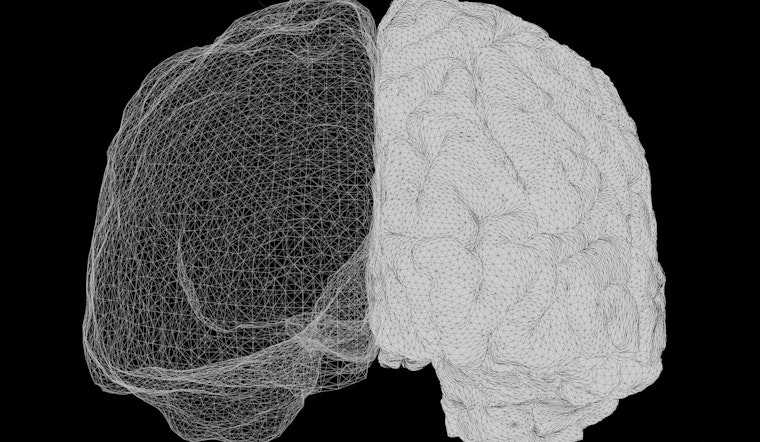
One well-placed wire in the brain may work just as well as two, at least for lab rats running tough mental drills in a Minnesota lab.
In a rodent study led by University of Minnesota neuroscientist Alik Widge, stimulating only one side of the brain produced the same boost in cognitive flexibility as stimulating both sides. The work, aimed at future treatments for stubborn obsessive‑compulsive disorder and other psychiatric conditions, found that rats given unilateral deep brain stimulation made faster decisions on a validated set‑shifting task without losing accuracy. Computational modeling pointed to more efficient evidence accumulation driving the change rather than a simple speed‑versus‑accuracy tradeoff. The team says the result strengthens the case for simpler deep-brain stimulation implants that use a single electrode capable of sensing brain rhythms and adjusting stimulation in real time.
As reported by TechTimes, the researchers compared bilateral, right‑unilateral, left‑unilateral and sham stimulation in the same animals and published their findings online in the Journal of Neuroscience this week. The report notes that every active stimulation condition cut response times without increasing error rates. Right‑unilateral stimulation showed numerically larger effects than left‑unilateral, but that apparent left‑right difference did not reach statistical significance.
The lab's full report, available as a preprint and archived at bioRxiv/PMC, dissects the behavior with a reinforcement‑learning drift‑diffusion model. In that framework, stimulation increased the drift rate, meaning quicker evidence accumulation, and reduced boundary separation, meaning a lower decision threshold. The combination yielded faster choices without more mistakes. The experiments used high‑frequency pulses in the clinical ballpark, around 130 Hz and amplitudes in the hundreds of microamps, and the improvement showed up in both male and female rats, the authors report.
Why this could change devices
One practical payoff of a unilateral strategy is straightforward: simpler surgery and less hardware in the head. For engineers, it also means fewer sensing channels to fold into an adaptive, closed‑loop system. Prior human work found that ventral capsule/ventral striatum deep brain stimulation boosts prefrontal theta rhythms in the 4–8 Hz range that track with better cognitive control, a mechanistic marker researchers hope to use as a real‑time feedback signal, according to Nature Communications. If a single lead can reproduce that cortical signal in people, device makers could aim for simpler, lower‑power closed‑loop stimulators that ease battery demands and cut down hardware burden.
Clinical context and access
In the United States, deep brain stimulation for OCD is available under an FDA Humanitarian Device Exemption and is reserved for patients who have already tried and failed multiple adequate medication trials and structured cognitive‑behavioral therapy, per the FDA. Even with that clearance, DBS for OCD remains rare, with clinical summaries estimating fewer than 300 implanted patients worldwide. High‑power settings commonly used for OCD come with a cost: they shorten battery life. In one series, non‑rechargeable generators averaged about 1.4 years before replacement, and some patients needed changes as often as every six months. Those headaches have pushed many teams toward rechargeable systems, and they are a big reason researchers are so interested in trimming hardware and energy needs as they pursue closed‑loop approaches.
What’s next
The authors stop short of telling clinicians to flip patients to unilateral DBS. They point out that rodent mid‑striatal anatomy differs from the human ventral capsule/ventral striatum and that human trials are needed to probe both laterality effects and prefrontal theta changes. Even so, they argue the preclinical result makes a human study more manageable and that simpler single‑electrode closed‑loop systems look like a realistic design target, conclusions laid out in the team's preprint.





