

























































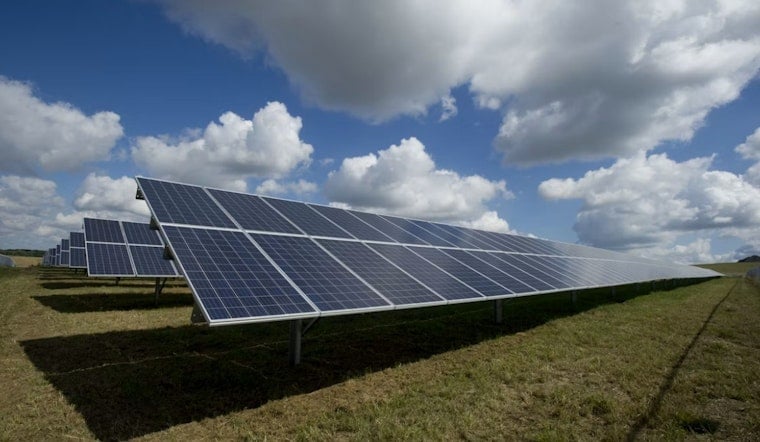
Union Station Church in Moore Station was standing room only on Monday night as more than 100 neighbors pressed solar developers for answers about a project they say is reshaping their quiet community almost overnight. Residents say work crews are already busy, and that a plan to blanket roughly 1,000 acres with about 420,000 solar panels would bring an industrial-scale array into direct view of multi-generation family properties. The questions kept coming about water, noise, and safety, along with a bigger fear that this might be the first domino in a broader wave of industrial development.
What residents were told
Residents were told the proposed solar project would sit along County Roads 4304 and 4305 and include roughly 420,000 panels over more than 1,000 acres, as reported by KLTV. Organizers said the turnout of more than 100 people reflected mounting frustration that land work and permitting appear to be moving faster than the community had been briefed. Several neighbors described Moore Station as a tight-knit, tree-lined town where kids still play outside, and said the arrival of a massive industrial array would be a jarring change to that landscape.
Mark McDaniels, introduced at the meeting as representing Zelestra and Solex Ridge Solar, told residents the company had heard their concerns about water. "The message is clear to us that the community is not interested in selling water, so we're not going to use it," he said, according to KLTV. Even with that assurance, neighbors pushed for specifics on permits and timelines and on who would be on the hook if private wells, narrow county roads, or emergency services are strained during construction.
Local water capacity is limited
The town runs on a small water system. The Texas Water Development Board lists Moore Station WSC in the East Texas regional water plan and notes that its supply comes from portions of the Carrizo-Wilcox aquifer, according to the Texas Water Development Board. Residents told meeting organizers they worry that a large project's cleaning, dust-control, and construction needs could strain both private wells and the small public system, a concern magnified by rough estimates circulated at the meeting that spoke of tens of thousands of gallons per day.
How much water does a utility solar farm use?
There is no single number that fits every project. Research and industry guidance show that water needs depend heavily on local climate and on whether a facility relies on traditional wet washing or waterless robotic brushes. NREL's soiling studies document the output losses that drive decisions about how often to clean, while peer-reviewed and industry analyses find that conventional wet cleaning can use multiple gallons per panel per cycle, adding up to hundreds of thousands of gallons on very large sites, even as automated dry systems can sharply cut that demand. See NREL and MDPI for technical context.
Roads and approvals have already moved
On the ground, county paperwork suggests the project already has traction. The Henderson County Commissioners Court approved a special road-use indemnity agreement and bond expansion tied to work on County Roads 4304 and 4305 in support of a solar project, according to a summary of the court action. The arrangement, recorded in September 2025, allows bonded contractors to move heavy equipment along those roads while requiring the contractor to pay for any damage, according to Citizen Portal.
Neighbors fear a larger buildout
Beyond water and roads, several residents said they suspect this solar array could be just the first piece of something bigger. They pointed to conversations about a proposed Henderson County data center and asked where the new project's power is ultimately headed, as reported by Now.Solar. Local leaders have scheduled another public meeting before the end of the month as residents organize for more oversight and clearer commitments. That meeting, the coverage notes, will be an early test of whether neighbors can secure binding protections for wells, local roads, and the open land they say defines Moore Station.
What's next
Residents said the project is subject to federal review under Section 106 of the National Historic Preservation Act with the Texas Historical Commission, a process that can require archaeological and historic-resource studies before ground-disturbing work goes forward, according to local reporting. City and county officials say additional public meetings are planned as the proposal moves through permitting and review, per KTRE.




