

























































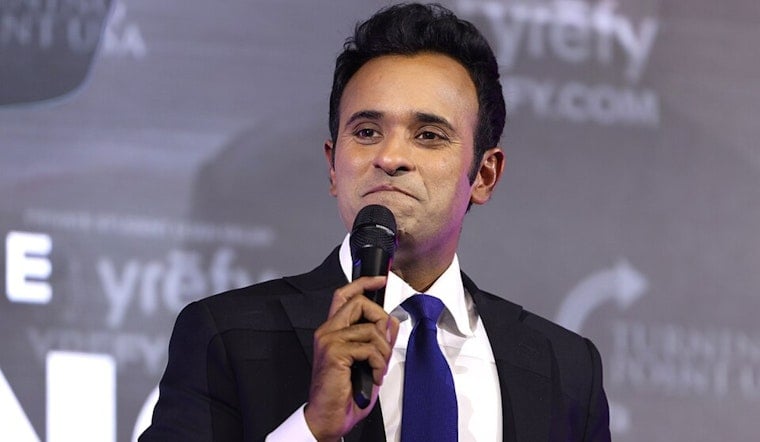
Vivek Ramaswamy’s campaign for Ohio governor has quietly run up more than $500,000 on credit cards, and the way it reported those bills is raising eyebrows, instead of listing out who got paid and for what, the committee logged big lump-sum reimbursements, leaving voters and watchdogs guessing about how the money was actually spent as the general election looms.
What the filings show
As reported by Columbus Underground, Ramaswamy’s committee reported $509,473 in credit-card charges overall and roughly $280,892 on an American Express account since April. The filings cover both pre- and post-primary reports and show large monthly reimbursements listed simply as “credit-card reimbursement” on expenditure forms.
Instead of itemizing each vendor and purchase, the campaign bundled expenses into those single monthly lines. That reporting choice obscures the names of vendors and the nature of the purchases that would normally appear on Ohio campaign finance statements, leaving a conspicuous blank space where details are supposed to be.
What the law requires
Ohio law requires supporting documentation for campaign expenditures, and state campaign-finance guidance tells treasurers to attach receipts, cancelled checks, or credit-card statements when they reimburse expenses. The Revised Code also bars concealment or misrepresentation of contributions or expenditures, and the Secretary of State’s campaign finance handbook explains how treasurers are expected to document credit-card reimbursements.
Public-records requests from the Ohio Capital Journal sought those backup documents after the pre-primary filing first showed six-figure credit-card reimbursements. At issue is whether the paperwork behind those charges matches what state law and guidance say should be there.
Watchdogs raise concerns
Local transparency advocates and campaign-finance experts say the pattern is worrisome, even if the total is small compared with the rest of the campaign’s spending. “How you spent the campaign cash should not be an obstacle to reporting what you spent it on,” Common Cause Ohio’s Catherine Turcer told reporters, while OpenSecrets’ Brendan Glavin warned that obscuring transactions “could have negative ripple effects.” Those reactions appeared in reporting republished by Mahoning Matters and the Ohio Capital Journal.
Measured against the campaign’s overall outlays, the $509,473 on credit cards is a sliver of the operation. It represents less than 2% of reported spending, and the candidate has already poured tens of millions into the race. The Ohio Capital Journal reports Ramaswamy has spent about $28.3 million since announcing his bid, and the governor’s contest is on track to be the most expensive in state history. Watchdogs say that kind of money is exactly why even bookkeeping choices deserve a hard look.
Legal questions and enforcement
Campaign-finance experts note that auditors can and do ask committees to produce receipts and related records. If a campaign cannot or does not supply them, the Ohio Election Integrity Commission, which now operates within the Secretary of State’s office, can open hearings or impose sanctions.
Reporters say the campaign and the Secretary of State’s office had not produced the requested documentation by the outlet’s deadline, and former Ohio Elections Commission director Phil Richter told reporters that campaigns typically have 21 days to respond to such inquiries. Whether this turns out to be an innocent accounting shortcut or a compliance problem will depend on what documents the campaign and state officials ultimately put on the table.
The Ramaswamy campaign told reporters it would look into the matter but did not provide receipts by the deadline cited in the reporting. For now, the public record shows a reporting strategy that keeps more than half a million dollars in spending in a high-stakes Ohio race largely out of view.





