

























































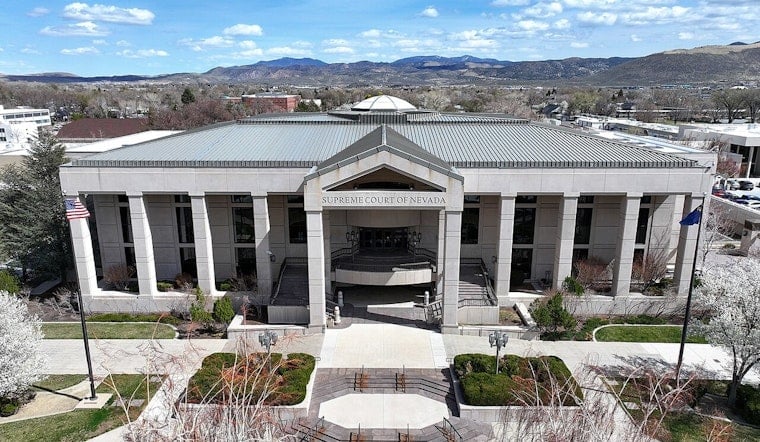
The Nevada Supreme Court has cleared the way for state prosecutors to pursue a murder case tied to a fentanyl sale that started on tribal land and ended with a fatal overdose off the reservation. In a ruling that reverses a lower court dismissal for lack of jurisdiction, the justices restored a second-degree murder charge and sent the case back to the district court. The key question was when the crime was legally completed for jurisdictional purposes, at the moment of the sale or at the moment of the overdose.
According to KSNV, prosecutors say the defendant, Rocky Stanley Salazar, sold fentanyl on Te-Moak tribal land to buyer Eric Cabibi, who then drove into non-tribal Nevada and later overdosed. Defense attorneys argued that because the sale took place on sovereign tribal territory, only federal authorities could bring charges. Nevada's high court disagreed and reversed the dismissal.
The court's written opinion, filed May 28, 2026, states that Salazar, a member of the Te-Moak Tribe of Western Shoshone Indians, allegedly sold fentanyl to Cabibi on reservation land, and that Cabibi later died of "acute fentanyl and methamphetamine toxicity" after leaving the reservation. The Supreme Court reversed the lower court and remanded the case to the Fourth Judicial District in Elko County for further proceedings. The full analysis appears in the opinion posted at Turtle Talk.
Nevada Law At The Center
Nevada's controlled-substances statute, NRS 453.333, makes a person guilty of murder if a controlled substance they sold proximately causes someone's death. The court leaned on that result element in upholding the charge, treating the death, not the bare act of sale, as the element that completes the offense for jurisdictional purposes.
Territorial Jurisdiction Rule
Under Nevada's territorial jurisdiction rule, NRS 171.015 allows the state to prosecute an offense that "commenced without the State" if it was "consummated within its boundaries." The justices concluded the overdose consummated the crime in non-tribal Nevada. That statutory framing is what the court said gives Nevada concurrent authority when a single criminal episode crosses from tribal to non-tribal territory.
The Major Crimes Act Question
The defense relied on the federal Major Crimes Act (18 U.S.C. § 1153), which grants exclusive federal jurisdiction over certain crimes committed by an Indian "within the Indian country." The Nevada Supreme Court rejected that reading on these facts, explaining that the Act applies to crimes committed wholly "within the Indian country" and does not clearly preempt state prosecution when the fatal result occurs off the reservation. The justices detailed that interpretation and cited similar holdings from other jurisdictions in the opinion posted by Turtle Talk.
How Lawyers Are Reading The Ruling
Early legal commentary casts the decision as a narrow ruling about interterritorial crimes, not a blanket green light for state prosecutions that touch reservation land. As analysis at CaseMine notes, several other states have allowed concurrent jurisdiction in comparable situations. Observers also point out that the court sidestepped a separate question, whether Nevada may proceed without a tribe's consent under NRS 41.430, a gap the NILL summary highlights as fertile ground for future litigation.
Fentanyl's Toll In Nevada
The ruling lands against a grim backdrop for Nevada's overdose crisis. The state's 2023 SUDORS report recorded 1,052 overdose deaths statewide and found illicitly manufactured fentanyl was involved in more than half of those cases, 51.8 percent. The same SUDORS report documents frequent missed opportunities for intervention, a pattern prosecutors have cited when pursuing dealer-focused theories in fatal overdose cases.
Legal Implications
On a practical level, the decision puts Nevada prosecutors back on track to pursue a murder theory under NRS 453.333 and returns the case to district court for the usual pretrial battles. At the same time, the justices explicitly declined to decide whether tribal consent under NRS 41.430 is required before the state assumes jurisdiction, a gap the NILL bulletin flags as an unresolved issue. The opinion, in other words, clarifies one pathway for state charges when a sale on reservation land has deadly consequences off the reservation, while leaving other jurisdictional fault lines for another day.
What Happens Next
The case now returns to the Fourth Judicial District in Elko County for further proceedings, where Salazar's attorneys could raise additional challenges as the record develops. As KSNV has reported, federal prosecutors still have the option to bring parallel charges, which means the legal fight could eventually play out on multiple tracks. For the moment, though, Nevada's high court has given state prosecutors firmer footing to bring death-resulting charges when a crime crosses the line between tribal and non-tribal land.





