

























































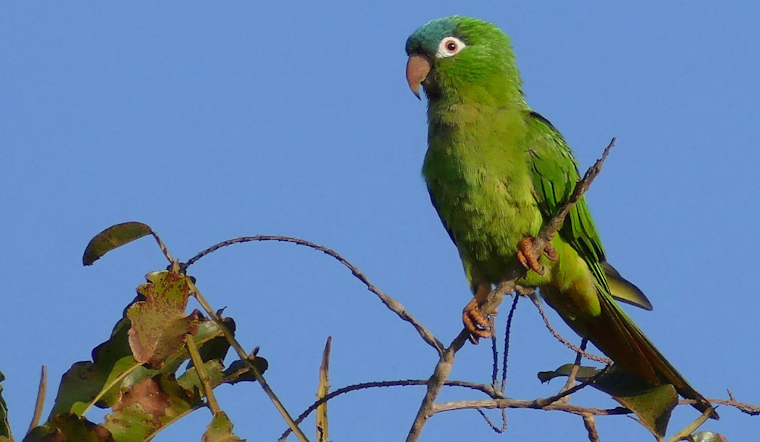
Those flashes of blue and green streaking across Melbourne are not a trick of the light. Blue crowned conures, small parrots native to South America, have been popping up from downtown Melbourne down U.S. 1 toward Palm Bay. Birdwatchers say the birds are pairing off and nesting in neighborhood trees, and local wildlife staff warn their numbers are likely to grow if pet releases keep happening.
Flocks and mating pairs have been spotted near downtown Melbourne, along U.S. 1 and Eau Gallie Boulevard, on Wickham Road and as far south as Palm Bay, according to FOX 35 Orlando. One resident told the station she first heard loud squawking, then saw a pair acting “lovey dovey” in a tree, and later realized more birds were hanging around the same area. After the station’s coverage, Brevard Zoo staff confirmed the species and weighed in on where the newcomers most likely came from.
Brevard Zoo: Parrots Need Lifelong Care
Keepers at Brevard Zoo say the conures are almost certainly escapees or former pets that found everything they need along the Space Coast. “Parrots require a lot of attention, special diets, intensive care, specialist veterinarians and tend to live a very long time,” Nicole Payne, Area Supervisor of Herps and Aquatics, wrote on the zoo’s site, per Brevard Zoo. The zoo also looks after a former pet conure named Zippy that arrived through the state’s rehoming program, a living reminder of what happens when these birds outlast their owners’ expectations.
Don't Release Pets: FWC Amnesty Program
The Florida Fish and Wildlife Conservation Commission runs an Exotic Pet Amnesty Program that lets owners surrender nonnative animals with no legal penalty, according to the agency. Officials say using the program instead of quietly letting animals go helps prevent new breeding colonies that can tangle up local ecosystems. Proper surrender limits the spread of nonnative species and cuts down on risks to both native wildlife and household pets.
A Broader Trend In Feral Parrots
Researchers have tracked dozens of parrot species now breeding in cities across the United States, and Audubon reports that some of those introduced flocks are firmly established. These birds do well on ornamental fruit, backyard plantings, and other easy food sources that thrive in warm, humid metros. That bigger national pattern helps explain why Space Coast residents are seeing conures in their neighborhoods, even if the sightings still feel surreal on a morning dog walk.
What To Watch For
Blue-crowned conures can live 30 to 40 years, according to the World Parrot Trust, and their popularity in the pet trade means any colonies that establish themselves in the wild can stick around for decades. They feed on fruit and flowers and find Florida’s landscaped yards and streetscapes inviting, but larger numbers could compete with native birds or turn into a noisy neighborhood headache. If you come across an injured or stray exotic bird, the Florida Fish and Wildlife Conservation Commission offers reporting guidelines and a wildlife alert hotline for residents.
For now, the flocks are a colorful, very loud sideshow for local birders, yet zookeepers and wildlife officials keep stressing the long-term responsibility that comes with owning exotic pets. If you spot these conures, note the location and time, snap a photo if it is safe, and pass the details to local wildlife authorities so scientists can track whether these bright blue newcomers are digging in for the long haul.





_(48382712156).jpg)