

























































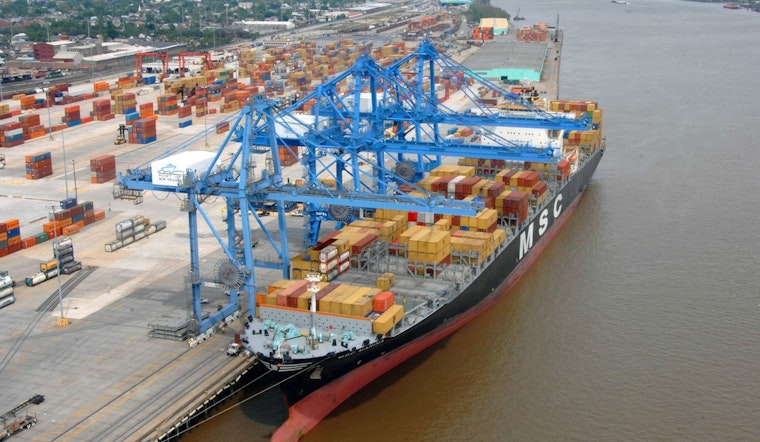
New Orleans is rolling out an AI-powered rail clearance system that port leaders say could turn the Port of New Orleans into a faster, more predictable gateway for oversized industrial cargo. The tool creates a live digital replica of the New Orleans Public Belt Railroad and feeds it into an app that can tell shippers in near real time whether huge transformers, turbines and other heavyweight gear can safely clear the route, and how to get them there. The timing lines up with a wave of energy and industrial projects that depend on heavy-lift components arriving by rail.
Port NOLA said in a May press release that it is teaming up with the New Orleans Public Belt Railroad and newly formed UTC Transoceanic on a customer-facing platform called TEID-RDC. Shippers plug in cargo dimensions, weight and railcar specifications, and the system quickly evaluates whether a move is feasible. “This technology changes the conversation for customers moving oversized cargo,” Port NOLA President and CEO Beth Branch said in the release. Port officials say the goal is to shrink what can be weeks or months of engineering work and coordination into nearly instant answers.
UTC Transoceanic, a joint venture between Houston-based UTC Overseas and New Orleans-based Transoceanic Development, launched this spring to handle project-specific breakbulk moves along the Gulf Coast, AJOT reported. The partners say UTC brings global project logistics experience, Transoceanic contributes local infrastructure know-how, and together they form a single team that can map out and execute complicated heavy-lift deliveries.
How the System Works
The platform’s backbone is a live “digital twin” of the New Orleans Public Belt Railroad built on the Palantir Foundry platform, which continuously tracks bridge ratings, crossing geometry and other clearance data so routing calls reflect current conditions, Port Technology reported. The TEID-RDC interface runs a shipper’s cargo profile against that twin to flag conflicts and suggest routings, turning what used to be lengthy feasibility studies into immediate checks.
Why It Matters for New Orleans
New Orleans already markets itself as one of the country’s most flexible inland gateways, with on-dock river access and direct connections to all six Class I railroads, according to the New Orleans Public Belt Railroad. As data center builds and energy projects ramp up, shippers want quicker, more reliable routing decisions so that massive components show up on time, Technical.ly reported.
“This is about New Orleans delivering cutting‑edge logistics solutions to the global energy sector,” said Gregory Rusovich, founder of Transoceanic Development, in Port NOLA. He noted that clear routing answers early in the process help cargo owners dodge expensive last-minute changes on multimillion-dollar projects.
Observers say pairing UTC Transoceanic’s project-logistics capacity with deep local rail knowledge could pull more breakbulk cargo through New Orleans instead of competing Gulf ports, New Orleans CityBusiness reported. Port leaders emphasize that the AI tool is meant to accelerate early planning and surface infrastructure issues sooner, not to replace engineers or crews who still handle lifts and specialized routing in the field.
UTC Transoceanic will be headquartered in New Orleans and is already in talks with project owners and contractors, AJOT reported. Port officials say the initiative is part of a broader effort to turn New Orleans’ multimodal network into a predictable on-ramp for the next wave of industrial development.



