

























































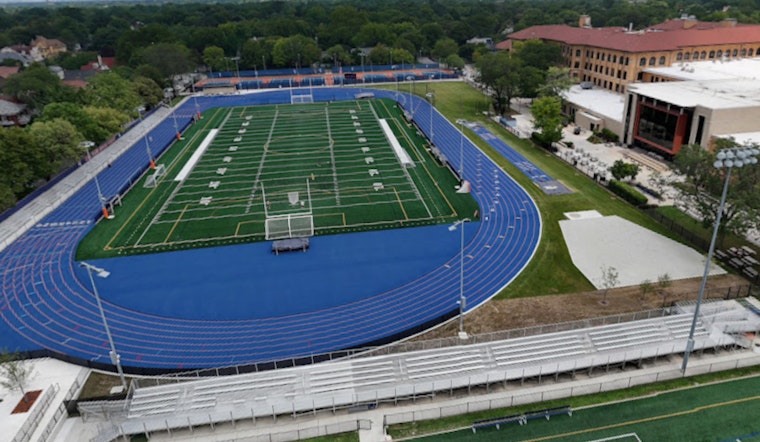
From the bleachers, Oak Park and River Forest High School’s rebuilt stadium looks like a standard Friday night setup, but the real action is buried beneath the turf. The district has installed a geothermal well field that leaders say will deliver major energy and climate benefits. The $12.5 million Project 2 overhaul includes roughly 240 vertical wells drilled about 500 feet down to handle heating, cooling and ventilation for the new physical-education wing. According to school officials, the system is expected to cut greenhouse-gas output and trim the district’s utility bill by nearly $400,000 a year.
“Underneath the turf right now is a geothermal well field,” Superintendent Greg Johnson said, according to CBS Chicago. The station reported that the array will supply all heating, cooling and ventilation for Project 2’s PE facilities and estimated emissions reductions roughly equivalent to driving an average passenger car more than 500,000 miles a year. CBS Chicago also noted the district expects the installation to deliver substantial annual savings as operations begin.
How the system works under the turf
District engineering materials describe a “final well field design” of about 240 vertical wells spaced roughly 20 feet apart, each drilled to an approximate depth of 500 feet and producing up to 606 tons of thermal capacity, as shown in the district board packet. The school’s Project 2 summary lists the well-field budget in the $7.9 million–$10.3 million range and puts the full Project 2 scope at about $12.5 million, with roughly $10.5 million for the wells and about $2 million for new drainage and turf, per the Project 2 summary. The planning documents also note the installation qualifies for federal incentives and that the district will publish performance metrics via an online geothermal dashboard.
Money and incentives
The district trimmed upfront expenses with a mix of state aid, federal rebates and foundation fundraising. Local reporting says the OPRFHS Imagine Foundation helped secure a $3.5 million state grant for the geothermal work, and the district expects additional federal rebates and tax incentives to lower net costs. Officials also worked with the energy-services firm Veregy to research and apply for grants and rebates tied to the installation.
Where it fits in the district plan
OPRF’s sustainability policy sets explicit targets: the district aims to reduce greenhouse-gas emissions to 45 percent of 2012 levels by 2030 and reach 100 percent reductions by 2050, and school leaders say Project 2 was designed to advance those goals. The district frames geothermal as a long-term life-cycle investment: higher upfront cost in exchange for lower operating emissions, smaller maintenance needs and longer system life compared with conventional boiler-and-chiller systems, according to school materials.
What to watch
Officials are planning a public ribbon-cutting tied to the completion of the geothermal work; local groups have flagged a ceremony for Wednesday, June 17, and the district says the system should be online in time for summer commissioning and fall practices. After the opening-day celebration, the real test will be whether the public dashboard and the district’s bookkeeping confirm the promised savings and emissions reductions over the next several years.




