

























































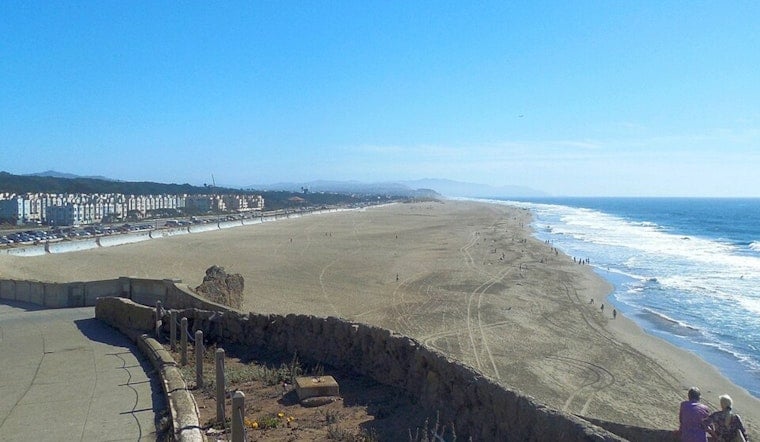
At San Francisco’s Ocean Beach, the sand is playing favorites, and it could reshape the shoreline for generations. The north end of the three-mile stretch keeps quietly stockpiling sand, while the south end, where a buried sewage tunnel and the Oceanside treatment plant sit, has been shrinking for decades. That lopsided pattern has forced researchers and city engineers into a stark choice: shield critical wastewater infrastructure or preserve the wide, walkable beach people love.
What the City Approved
To buy time and stability at the crumbling south end, city and state officials have backed an adaptation plan centered on a buried seawall. According to the California Coastal Commission, the approved Coastal Development Permit clears the way for a roughly 3,200-foot underground structure, with wall elements averaging about 55 feet in vertical extent. The project is framed as protection for the Lake Merced Tunnel and related wastewater assets, a call that the San Francisco Chronicle has described as controversial.
The Sand Mystery Scientists Are Trying to Solve
The real puzzle is not how to pour concrete, but why the sand itself is behaving so differently along one continuous beach. Work by the U.S. Geological Survey shows that human changes to sediment supply and the shape of the nearshore seafloor have altered how sand gets steered toward the coast. As reported by The San Francisco Standard, researchers, including Patrick Barnard, say decades of dredging, shipping-channel tweaks, and shoreline armoring have likely re-routed huge volumes of sediment, feeding the northern build-up while leaving the southern reach starved.
Short-Term Fixes: Sand, Sand and More Sand
While the long-term science plays catch-up, the city has leaned on a blunt instrument: dumping more sand where the bluff keeps eroding. Crews have repeatedly shifted material by truck and at times by dredge to beef up the south end. In 2021, the U.S. Army Corps of Engineers placed about 270,000 cubic yards of dredged sand on South Ocean Beach under a beneficial-use project with a total listed cost of roughly $13.37 million. The San Francisco Public Utilities Commission describes these nourishment runs as a short-term program meant to shield wastewater infrastructure while longer-term options are sorted out.
Money and Trade-Offs
The price tag for keeping the edge of the city out of the surf is anything but small. SPUR’s 2012 Ocean Beach Master Plan pegged a multi-decade package of actions at around $350 million. Regulators and reporters have also warned that serial sand replenishment is its own budget beast, with per-placement estimates of roughly $1 million and serious questions about whether that pattern can be sustained over decades. That math is a major reason many agencies have landed on a buried armoring strategy, paired with dune restoration, as the most pragmatic path on offer.
Voices from the Sand: Scientists, Surfers and the City
Local researchers and surfers worry that if the wall is misjudged, it could lock the city into a cycle of heavier engineering and never-ending sand drops. The Coastal Commission’s own staff report underlined why the stakes feel so high: a failure of the Lake Merced Tunnel or other buried pipes in the area could unleash large volumes of untreated combined stormwater and sewage, a primary rationale cited by project backers for locking in protection of the system.
What Happens Next
Design work for the buried seawall and related improvements is moving forward, but the timeline is still a moving target. City agencies have talked about being ready to build sometime in the 2027 window, while warning that additional design work and environmental monitoring could nudge that schedule. According to the San Francisco Recreation and Park Department, project documents are working their way through agency review and public coordination as the team pushes toward final construction plans. Opponents say they intend to keep pressing for alternatives and tight oversight as the permit inches toward real-world construction.
In the end, what happens to Ocean Beach may depend less on a single buried wall than on whether scientists can crack the code of where the sand comes from and where it wants to go next. Many researchers argue that solving that sediment riddle should come before the city commits taxpayers to decades of coastal armoring and repeated maintenance.




