

























































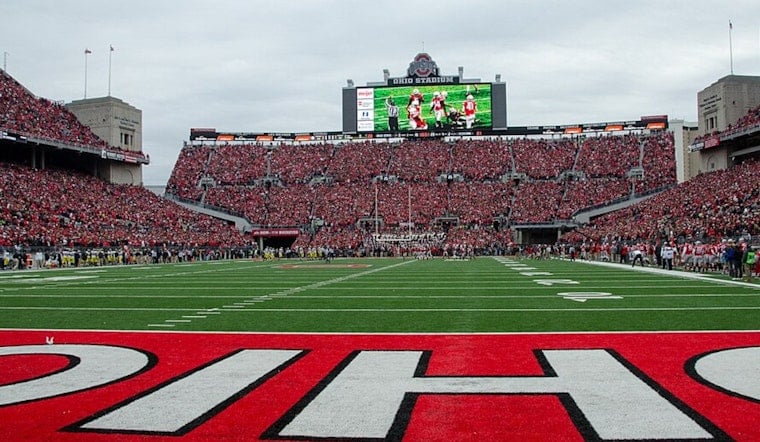
Ohio State’s latest blue‑chip commit says at least a few college programs tried to sweeten their recruiting pitch in a way that had nothing to do with playbooks or NIL spreadsheets.
Jamier Brown, a five‑star wide receiver committed to the Buckeyes, said in an Instagram interview posted Saturday that some rival programs tried to sway him and other recruits by “offering a couple females” as part of the deal. The blunt claim lands right in the thick of an already heated fight over how NIL money, booster power, and now personal perks are shaping where elite high‑school players land.
Brown told The Columbus Dispatch that “a couple of schools have offered a couple of females out for me to commit to that school.” Brown is a five‑star prospect from Big Walnut High School in Sunbury who committed to Ohio State in November 2024, a status noted by Eleven Warriors. According to the Dispatch report, the Instagram clip featuring Brown’s comments was posted by Endzone Exposure.
He is not the only recruit describing that kind of attention. Ace Alston, another highly recruited prospect, told The Columbus Dispatch that “every week they have like girls calling me and facetiming me, stuff like that.” Neither player named specific schools, and the clip circulating online did not include documents or additional evidence to back up the allegations.
NIL’s New World And The Gray Areas
Since the NCAA’s interim name, image, and likeness policy kicked in back in July 2021, college sports have been living in a kind of controlled chaos. Boosters and third‑party collectives now operate as major players in the recruiting marketplace, cutting deals that can make or break a program’s class.
The setup lets athletes cash in on their brands, but it has also carved out a wide gray zone where legal NIL agreements can start to look like old‑school recruiting inducements. NCAA materials and a primer from Sports Illustrated walk through how collectives and booster involvement have complicated what compliance departments are supposed to police.
Where The Rulebook Kicks In
On paper, the rules are clear: anything that counts as a recruiting inducement is still banned under NCAA guidelines. Allegations like Brown’s could draw the eye of compliance offices if more evidence ever surfaces.
The divide between legitimate NIL activity and impermissible recruiting benefits has become a favorite topic for regulators and reporters, and schools that are found to have arranged improper perks can face investigations and penalties. ESPN has tracked how both the NCAA and individual programs are trying to enforce that line in real time.
For his part, Brown is still locked in with Ohio State. He remains listed among the top national prospects in the 2027 class and has publicly reaffirmed his commitment while saying earlier this spring that he had shut down visits, according to Eleven Warriors.
Brown’s comments, along with Alston’s description of a steady stream of calls and FaceTimes, are likely to keep the conversation churning among recruits, boosters, and compliance staffs about where the lines really are. For now, the Instagram interview is the most public record of the claim, and the schools Brown referenced remain unnamed in his account.



.jpg)