

























































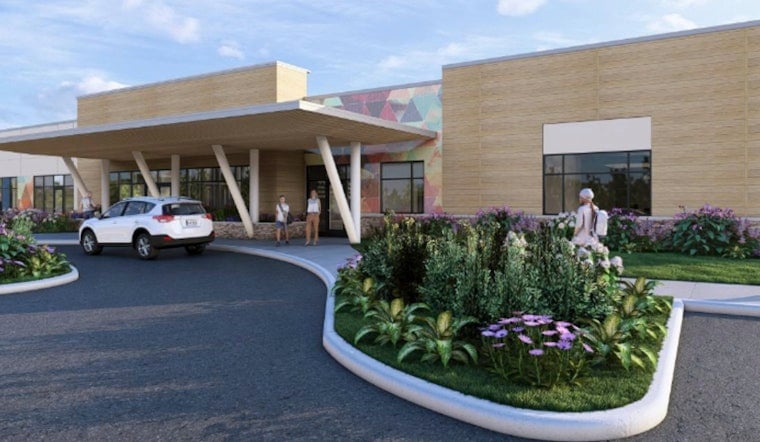
Orange County is moving ahead with a major mental health project, signing off on a $29.4 million Crisis Diversion Facility in Hillsborough that is expected to break ground this summer. In a 6-0 vote, county commissioners approved the roughly 21,000-square-foot center, which will run 24/7 and combine a 12-bay behavioral health urgent care for children and adults with a 16-bed stabilization unit for adults who need longer stays. County leaders say the goal is straightforward, steer people in crisis away from packed emergency rooms and county jails and into coordinated treatment with built-in follow-up.
The board’s decision also extended Gilbane Building Co.’s project management contract and locked in a guaranteed price that is about $3.4 million higher than an earlier $26 million estimate, bringing the total to roughly $29.4 million, according to The News & Observer. Commissioners signed off after years of planning and public meetings that repeatedly flagged a crisis diversion facility as a major missing piece in the county’s behavioral health and justice systems.
Construction Manager And Timeline
On its project listing, Gilbane Building Co. describes the facility as an approximately 20,000-square-foot, single-story building on a five-acre site on Waterstone Drive, right next to the UNC Hospitals campus. The contractor’s schedule shows pre-construction and bidding activity in the spring, followed by about 16 months of construction work.
Money, Operating Costs And Schedule
Orange County’s Capital Investment Plan reserves about $22.37 million for construction in FY2025-26, with earlier line items covering design and land acquisition. Once the doors are open, annual operating costs are projected at around $3.0 million, according to the Orange County Capital Investment Plan. The document lays out a target opening window in late 2026 or early 2027 and estimates that the center could handle up to about 365 behavioral health visits each month.
What The Center Will Offer
Plans call for a non-clinical, trauma-informed layout rather than a harsh institutional feel. Local reporting describes a 12-seat Behavioral Health Urgent Care serving people ages 4 and up, a 16-bed facility-based crisis unit for adults who need longer stabilization, a peer living room, a resource center and an enclosed courtyard. Coverage also highlights sustainability features, including a planned 274-panel solar array expected to provide roughly 72% of the building’s peak electricity demand, and supporters say the design will lean on natural light and recycled materials.
Backers ranging from peer support specialists to law enforcement crisis teams told commissioners that the facility should cut down on emergency department boarding and arrests by offering short-term stabilization and clear handoffs into ongoing treatment, improving outcomes for people in crisis, as reported by The News & Observer.
Statewide Push To Expand Crisis Care
North Carolina officials are wrestling with long waits for psychiatric beds and extended “boarding” in hospital emergency departments, and that pressure has helped drive a broader push for community-based crisis services such as facility-based crisis units and behavioral health urgent cares, according to reporting by WUNC. State health leaders and advocates have backed pilot respite centers and urgent care-style programs in hopes of cutting costly hospital stays and reducing arrests.
Recent announcements from the N.C. Department of Health and Human Services highlight state support for new community crisis and peer-run options, positioning projects like Orange County’s diversion facility as part of a wider effort rather than a one-off experiment.
Next Steps
County procurement postings and third-party listings show that requests for qualifications and commissioning documents are already in play as the project moves toward full contractor selection and on-site work. Officials say the county plans to bring in a third-party clinical operator and has started talking with health systems and neighboring towns about operational partnerships and cost-sharing as it finalizes staffing models and reimbursement plans.
County briefing materials note that a provider will be considered during pre-construction and start-up planning, and recent RFQ listings lay out the commissioning and bid phases for the build as the crisis hub inches closer to becoming a concrete, and solar-powered, reality.



