

























































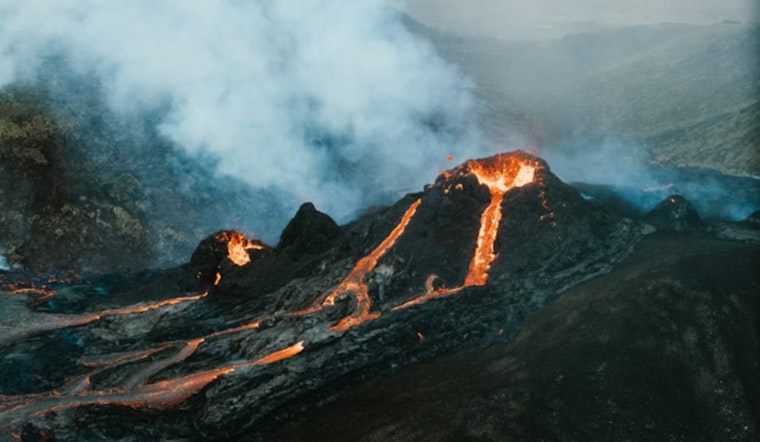
Kilauea's summit lit up early Monday as Episode 48 of the Halemaʻumaʻu eruption kicked off with fresh lava fountaining inside the crater. Activity ramped up at about 4:40 a.m. HST, focused mainly at the north vent, with the south vent occasionally spilling over. The fiery action stayed confined to the crater floor inside Hawaiʻi Volcanoes National Park, but it was intense enough to trigger airspace and public-safety alerts across the Big Island.
USGS: Episode 48 Ignites At 4:40 A.M.
The U.S. Geological Survey's Hawaiian Volcano Observatory reported that the new episode "began at 4:40 a.m. HST on June 1," with the north vent doing most of the fountaining while the south vent produced intermittent overflows. HVO kept the Volcano Alert Level at WATCH and the Aviation Color Code at ORANGE as the fountains developed. All eruptive vents and lava flows remain confined to Halemaʻumaʻu crater within Hawaiʻi Volcanoes National Park, according to the U.S. Geological Survey.
Shifting Winds, Ash And Vog Concerns
According to the National Weather Service, winds could carry volcanic gas and lightweight tephra downwind, sending ash and vog toward nearby communities depending on altitude and wind direction. Local coverage has cautioned that Pele's hair, pumice and fine ash can irritate skin, eyes and lungs and may be remobilized on windy days. Hawaii News Now advised people with respiratory issues to keep an eye on air-quality updates and stay away from the summit area.
Park Closures And Local Safety Steps
Hawaiʻi Volcanoes National Park remains closed around Halemaʻumaʻu, and park officials are warning visitors to stay back from the crater rim because tephra-laden slopes are unstable. Hawaii County Civil Defense has urged residents to close windows and protect rain-catchment systems, as reported by the Honolulu Star-Advertiser. For the latest on access and visitor information, see Hawaiʻi Volcanoes National Park.
Ongoing Eruption And What Scientists Are Watching
The eruption that began on December 23, 2024, has unfolded in a series of brief fountaining episodes, and HVO notes that most of these bursts last a day or less. Scientists are tracking summit tilt, gas output and seismic signals to see whether this episode is nearing a peak or already starting to wind down, with additional notices and livestream updates planned as conditions change. Hoodline previously examined the volcano's rising activity in April in a piece on its rising activity in April, and the U.S. Geological Survey remains the go-to source for live cameras and official eruption updates.




